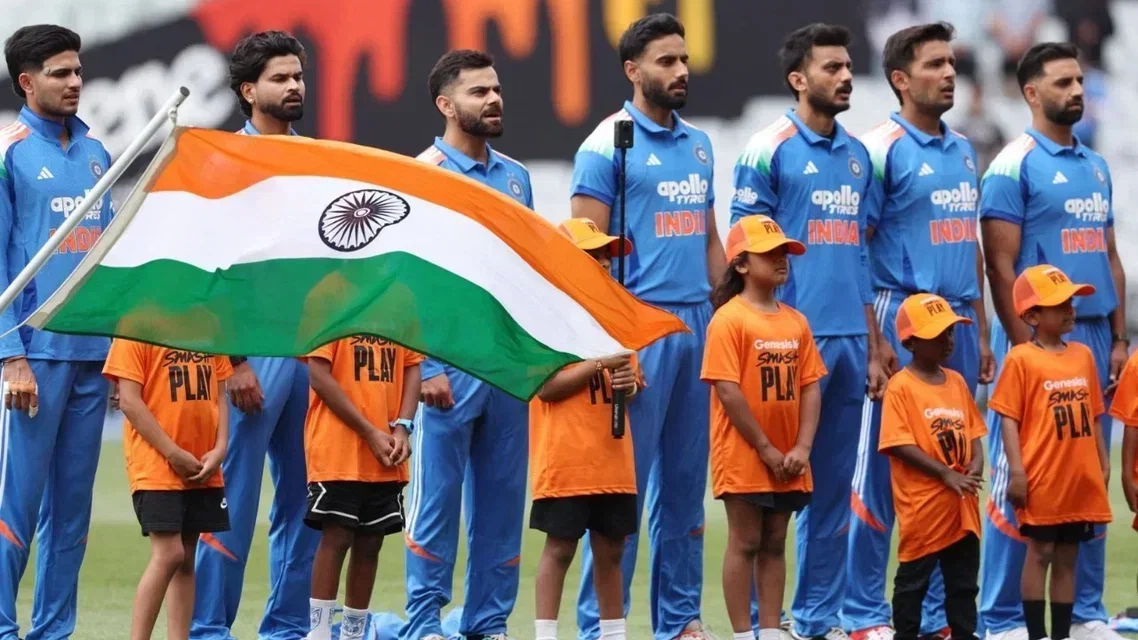
 Indian pacers put on a show in Auckland. Image Credits: AFP
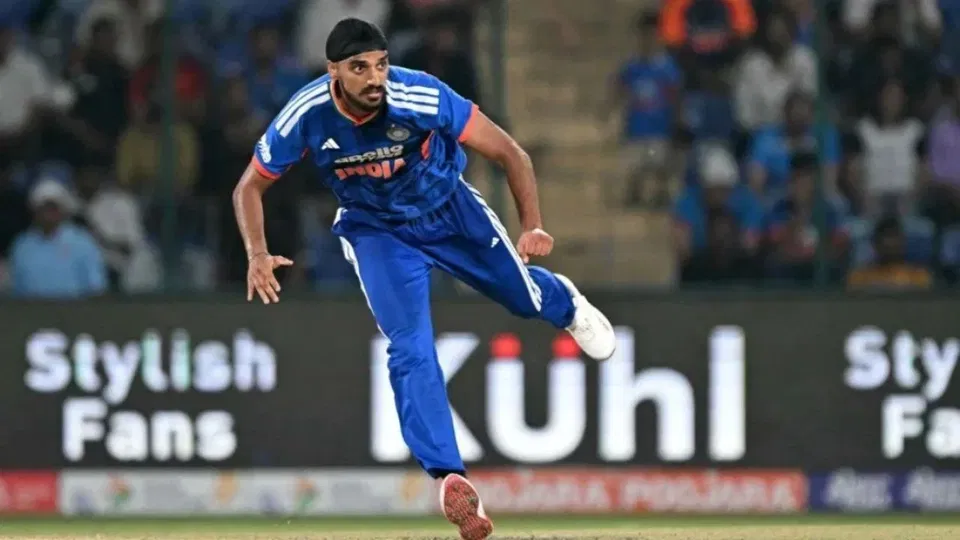
Arshdeep Singh was at his usual witty self during his mid-innings conference with the broadcasters in Auckland. In the process, he also touched on an important point right at the start.
“After coming from the subcontinent, when you get some life in the wickets, it's always a pleasure to bowl here. And yeah, the wind is helping as well.”
In India, Arshdeep, or any other Indian pacer, hardly gets either. The pitches are largely flat, where batters can play through the line at almost every stage of the innings. As for the wind, it’s never a massive factor.
India just played one of the highest-scoring series in ODI history against West Indies. A run rate of 7.43 was the highest ever in a multi-match rubber. New Zealand must have brought more than ‘pleasure’ for all of those pacers.
Indian pacers make the most of Auckland conditions
As short as Eden Park’s dimensions are, ODIs haven’t historically been as high-scoring here. Part of the reason is the bounce, among the highest in world cricket, and movement, which lasts longer than at most other venues. Then there’s also a nice breeze blowing across the ground.
That was just enough for even inexperienced Indian pacers to exploit. Anshul Kamboj, for instance, bowled the most economical spell by an Indian pacer since 2016. He bowled around 44.26% good-length deliveries and kept his lines just on top of off with a wobble seam.
.jpg)
Arshdeep Singh operated on similar lines and consistently bowled hard lengths, with 58.06% of deliveries in the 7-10 metre mark.
Against right-handers, he simply angled the deliveries away from over the wicket, and movement did the rest. Only after four wickets and getting into the tail did he get carried away in search of a fifth.

Gurnoor Brar, meanwhile, made the most of the tennis-ball bounce by hitting the seam hard and generating significant kick with his high-arm release. Around 41.38% of his deliveries were back of a length, and another 32.76% were short.
There was also an entertaining battle with No.11 Blair Tickner, where both players enjoyed the contest before Brar eventually came out on top.
Only Auqib Nabi missed out a bit, spraying erratic lines and failing to control the movement up front. But that’s one aspect of a bowling attack too. One of them is always allowed a bad day when others have done their part.
How India’s pace attack was ineffective at home
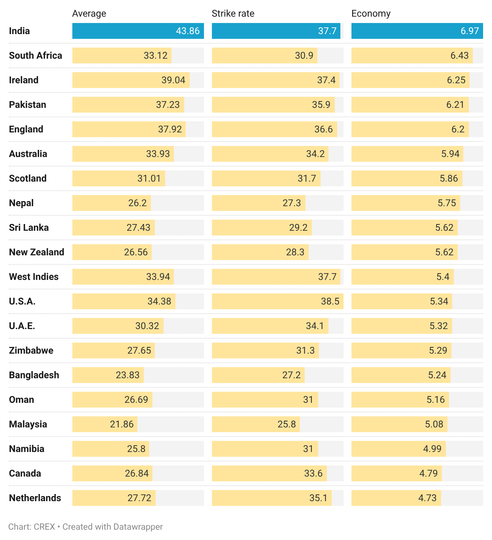 Pacers in each country in ODIs since 2025
The irony is that the same bowling attack, barring Arshdeep Singh, looked rather listless not too long ago. Auqib Nabi and Anshul Kamboj conceded more than nine runs per over in the only game they played, while Gurnoor went at 7.54 runs per over across his three appearances against the West Indies.
Earlier this year, against another formidable side in New Zealand, India again played on relatively flat home surfaces. In that series, pacers from both sides collectively conceded 6.23 runs per over and went at a boundary every 7.68 deliveries.
It was a similar story when South Africa toured in November last year. The surfaces offered little assistance to fast bowlers, who conceded 6.77 runs per over and a boundary every 7.15 deliveries. Dew also set in during the second innings, making life even harder for the pacers as the big scores kept piling up.
Since 2025, pacers in India have collectively averaged 43.86 and gone at an economy rate of 6.97, both the worst figures among all nations. The 300-run mark has been breached 16 times in 30 innings during this period. India chased down a 400-plus total against the West Indies, before the visitors returned the favour by chasing 350 in the last two matches.
This flat-pitch era has arrived at the worst possible time for India's bowling unit. Jasprit Bumrah has played just two ODIs since the 2023 World Cup, while Mohammed Shami and Hardik Pandya last featured in the format at the 2025 Champions Trophy.
India have experimented with several new options, with as many as six pacers making their debuts since last year. While each brings certain unique attributes, their defensive skills are still a work in progress. Thrown straight into the deep end on such flat surfaces, they have often struggled to make the most of their natural strengths.
They have been forced into defensive mode from the outset, leaving little room for development. ODI cricket has increasingly become an extended version of T20 cricket for them.
There has been hardly any scope to work on the traditional demands of the format, such as constructing an over, setting up a batter or occasionally attacking with aggressive lengths.
India should leave something for pacers at home
India will play several home ODIs in the build-up to the 2027 World Cup. Unlike in recent matches, however, they need to play on better-balanced pitches that offer something to the bowlers. They cannot replicate overseas conditions, of course, but they can control certain aspects.
For starters, they can ask curators to leave some grass on the surface to encourage seam movement upfront and ensure reasonable bounce. This would also prevent the pitch from deteriorating too quickly. There’s also room to limit the use of heavy rollers before the game.
Playing on more balanced surfaces would help India's pacers better understand the intricacies of ODI bowling. They would have greater scope to attack, experiment with different lengths and learn to build pressure. By the time they travel overseas, the inexperienced bowlers would understand better how to adapt and operate in different situations.
The conditions in Southern Africa, where the next World Cup will be held in less than a year, will present a different challenge. Johannesburg could produce some extra bounce, while Paarl and Harare could offer relatively slower surfaces. Exposure to pitches that aren’t entirely flat will stand India's pacers in good stead.
Additionally, it would also benefit the batters. The Auckland ODI offered a glimpse of the encouraging attributes India's pacers possess, some of which could prove particularly useful in Southern Africa next year. At this stage, it is about giving them the right exposure and allowing those skills to develop further before the World Cup.
.jpg)