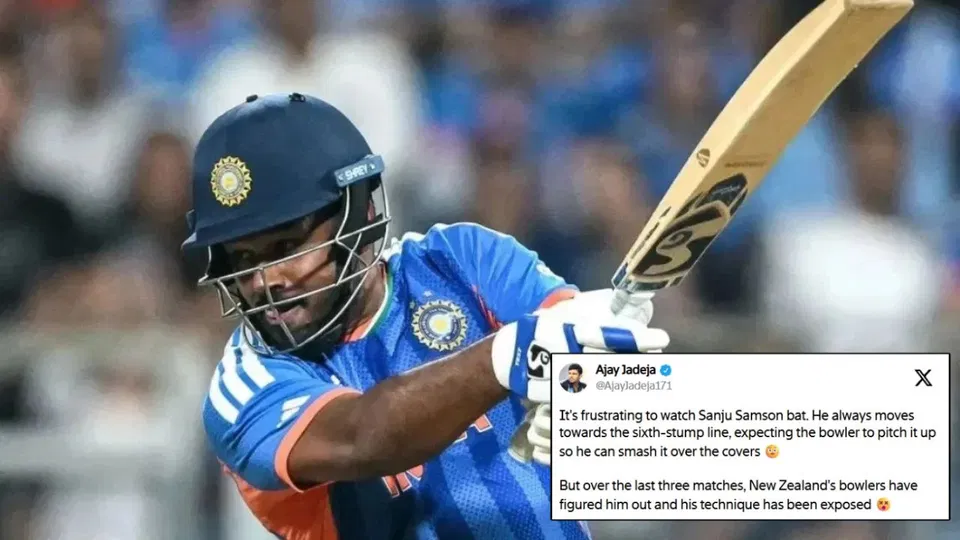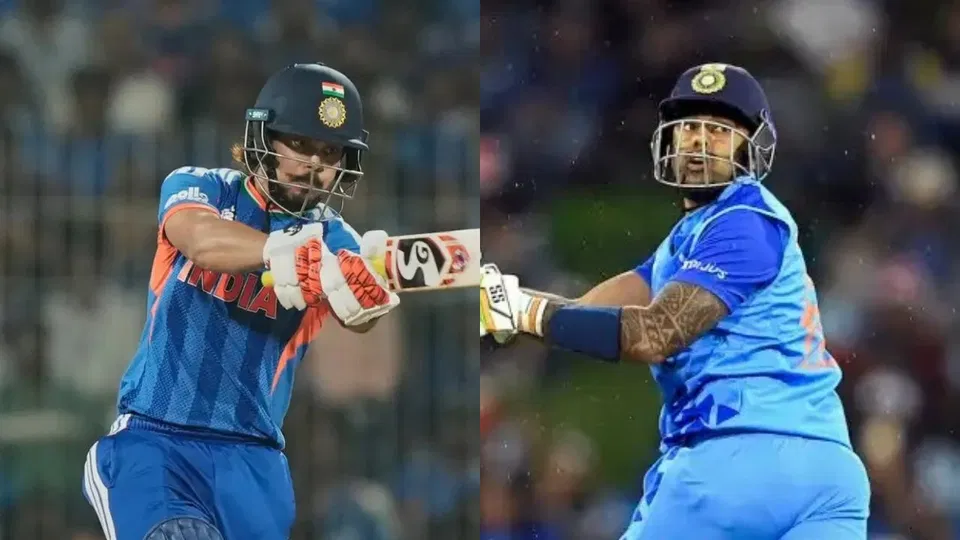



 Abhishek Sharma couldn't make a big impact in the final two games against New Zealand. Image Credits: AFP
Abhishek Sharma can be hard to stop when he’s in the zone. New Zealand found it firsthand in Wellington, where he decimated their bowling attack with sublime hitting. Nothing worked for them until Abhishek mistimed a slower delivery after a magnificent century.

But New Zealand would still feel they went off their plans far too early. The margins are small. Even a little error is enough for the Indian opener to unleash his range.
How New Zealand shifted their lines to stop Abhishek Sharma
A major issue with New Zealand’s pacers in the initial three games was giving Abhishek Sharma too much width. That allowed him to free his arms and complete his downswing, powering through his favourite regions from third man to cover. 51.90% of his powerplay runs in the rubber against pace came from these regions.
Then, short boundaries at every ground make things hard for the bowlers. For instance, Hagley Oval in Christchurch has short straight boundaries, while Hnry Stadium in Wellington has short square dimensions. In Auckland, every boundary was significantly short, and Seddon Park had almost equally tiny boundaries.
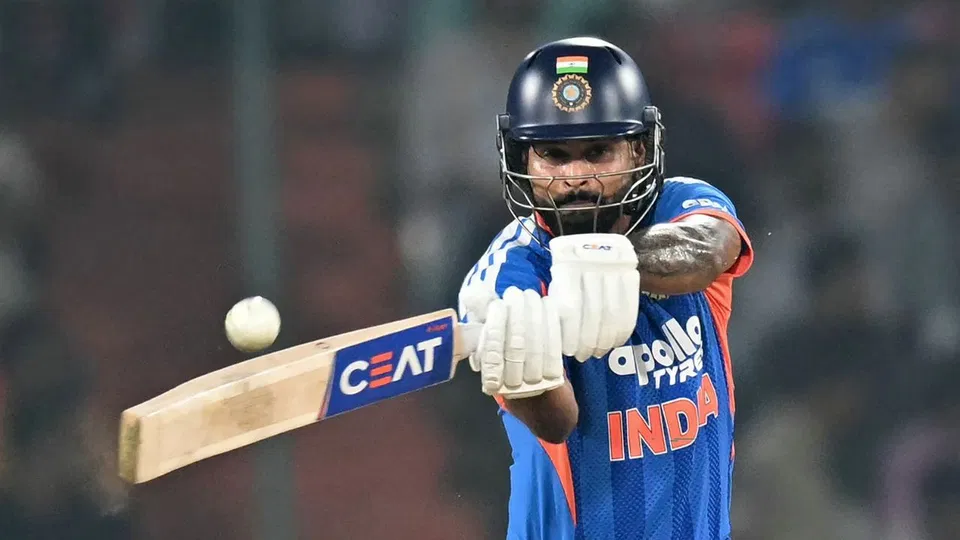
When square boundaries are short, the only way to stop Abhishek is by bowling hard lengths into the body. That didn’t happen in the first three matches, at least. And after reasonable starts to kick off the series, the southpaw finally amassed a big score in Wellington by taking full advantage of faulty lines.
In the first three matches, New Zealand pacers bowled only 55% of deliveries in Abhishek’s body, from middle to leg stump in the powerplay. Around 40% were outside off-stump or even wider. On such balls, he scored at 321.42.
In the last two games, however, the lines became a lot straighter. They cramped him for room and blocked his scoring areas square of the wicket on the off side. 88.23% of pace deliveries were from middle to leg stump, sometimes even further into the leg side.
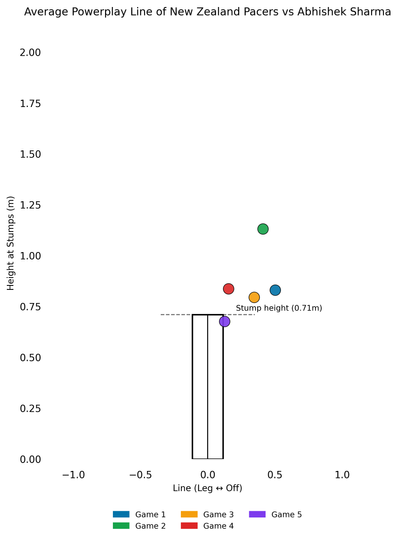 New Zealand seamers straightened their lines against Abhishek Sharma
When lines are straight and into the body, the hard-length deliveries automatically become effective against Abhishek. In Auckland, for instance, Matthew Fisher kept bowling hard lengths and got some spongy bounce to hit at the top of the bat. Earlier, Jacob Duffy and Nathan Smith consistently bowled into his pads, and Abhishek missed his flick a couple of times.
Why straight lines worked for New Zealand
With the lines away from the stumps, Abhishek Sharma could also come down the track and loft over the off side during the field restrictions. He played around 20% of deliveries, from either down the track or backing away in the first three games against pacers. That’s how he always operates in the powerplay.
However, as the lines became straighter, Abhishek couldn’t come down the track or make room to force his way out. Once he couldn’t make room, he had to play straighter and down the ground. He could target the front boundaries, but the lengths were consistently away from him, and he couldn’t generate substantial power in his shots.
Abhishek Sharma tried to clear his front leg and whack over deep mid-wicket off Adam Milne in Hamilton. But he could only get the toe end of the bat and gave a catch to mid-on. From the hard length, the line started from middle and moved away from the batter with some sideways movement and bounce.
“A little bit of swing early, which always helps. A little bit of inconsistent bounce; saw a number of wickets splicing and getting caught in the outfield. I think again, once it's swinging it's sort of just trying to get it up there, use that swing. And fortunately they hit a couple in the air today that went to fielders as opposed to the boundaries, and we got them early,” Milne explained after the first innings.
Early movement, coupled with extra bounce, definitely played a role in Abhishek’s latest couple of dismissals. But then seamers also extracted substantial seam movement in Wellington, which persisted even late in the game after all the carnage. On that occasion, however, New Zealand consistently gave him too much room to access the off side when square boundaries were short, and the movement hardly mattered then.
So, it was a combination of both, but straighter lines definitely played a role. It’s hard to pinpoint why the Kiwis bowled wider lines initially, but one possible explanation could be Abhishek’s dismissals in Zimbabwe. Blessing Muzarabani consistently generated awkward bounce and kept his lines away from the hitting arc by angling his ball across him.
However, the Harare pitches were not as quick or fresh, with signs of slowness from the powerplay onwards. The boundaries were also considerably bigger there. Zimbabwe had more room for error.
In contrast, even mistimes and leading edges flew over the ropes at almost every New Zealand venue. The correction eventually came at the fag end of the series, and so did the success. But by then, Abhishek Sharma had already done the damage.

.jpg?type=mq "3 Players India Should Drop For Next T20I Series")