








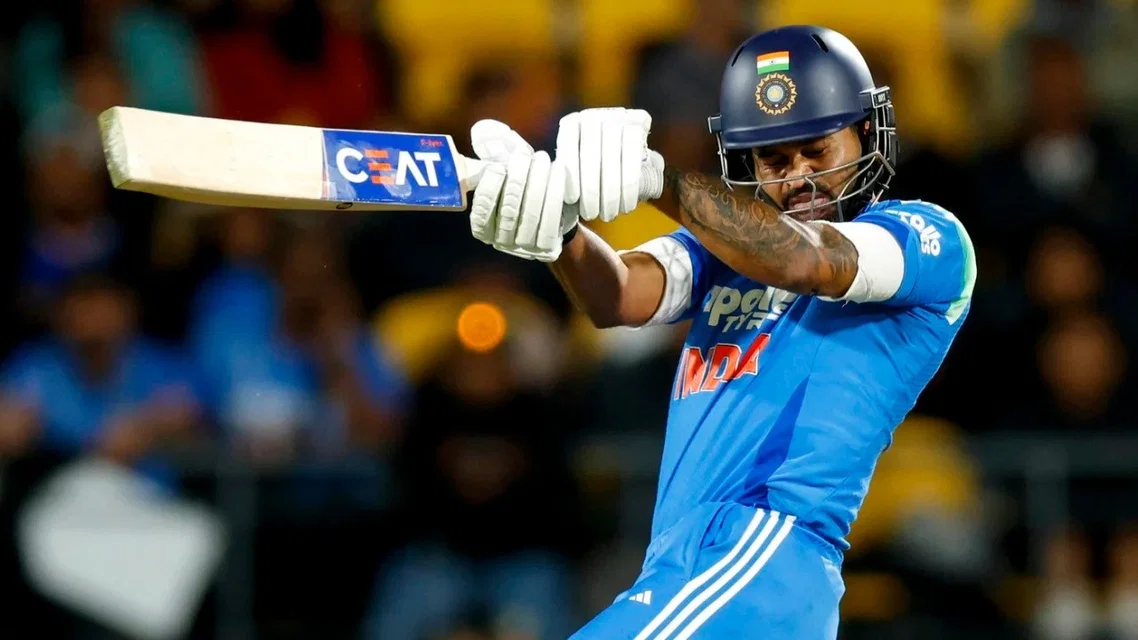
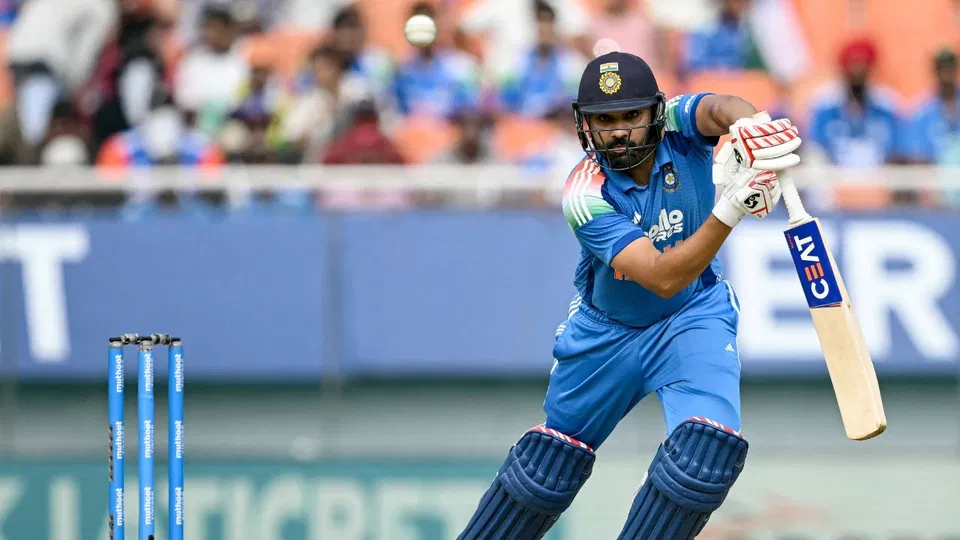
 Shreyas Iyer's short-ball issues have been in the limelight again. Image Credits: Getty Images
There was a certain irony when Naman Dhir rolled his wrists down and played a controlled pull to deep midwicket on his very first delivery in Auckland. Coming in at No.7, he had just done what Shreyas Iyer couldn’t on the previous delivery: control his pull shot and keep it along the ground. A short ball rushed him, and he spliced it to Henry Nicholls at midwicket.
Before this dismissal, Iyer had played two pull shots and a hook shot; two were uncontrolled. He played another uncontrolled pull in Wellington, where the conditions were equally tricky. In one way, this shouldn’t surprise anymore, but the reactions are never-ending.
Shreyas Iyer’s short-ball issues come to the fore again
 Shreyas Iyer vs back-of-a-length and short deliveries in ODIs since 2025
One of the peculiarities of international cricket is how stubbornly a label sticks once it takes hold. It can outlast visible improvements and better results. In Shreyas Iyer’s case, that label is his perceived vulnerability against short balls.
There are issues, undoubtedly, but there are some workarounds too. For instance, Iyer stopped staying side-on and opened his stance a bit to avoid getting cramped, giving him more access to the on-side. So, his front shoulder opened more, and his bat path could swing more cleanly by coming from the gully region.
At times, even staying on the leg side of the ball doesn’t affect much in subcontinent conditions. As a result, he found greater success on decks without substantial seam movement or steep bounce, which batters mostly get in Asia. That explains why he always finds ways to score on such tracks.
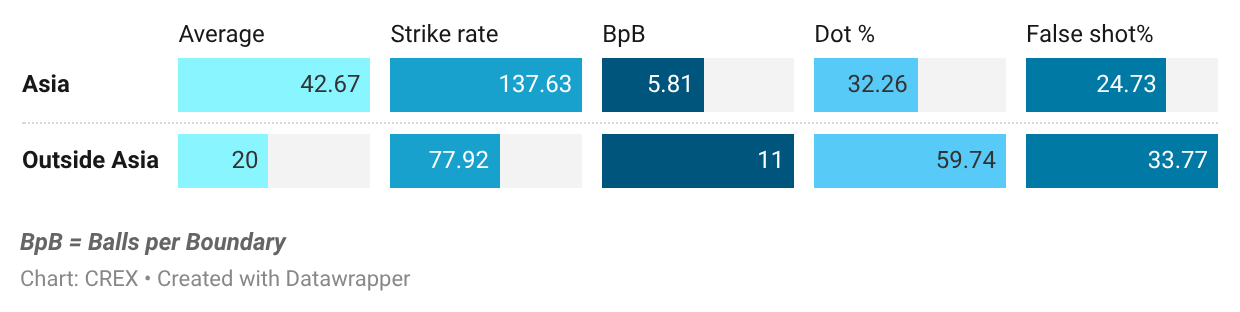
Since 2025, Iyer has averaged 42.67 and struck at 137.63 against back-of-a-length and short deliveries in subcontinent conditions. He plays just 24.73% false shots. After these modifications, he could pull even express pacers like Jofra Archer and Gus Atkinson with relative ease at home.

Outside Asia, however, his average and strike rate on these lengths fall to 20 and 77.92, respectively. False shots rise to 33.77%. Part of the problem could be linked to the improvements that led to his success in the first place.
After the adjustments, Shreyas Iyer has this attacking mindset, with more emphasis on aerial shots to the leg side against short deliveries. At times, he fails to keep the ball down because his bat face is open, which helps his shots get more elevation. That’s what happened in Auckland in the first ODI; he initially found a boundary and a six despite being rushed and was eventually caught at midwicket while taking on the short balls.
The ball has seamed deep into the innings in New Zealand, which could have further impacted how Iyer handles short deliveries. For instance, he has shown glimpses of his old, faulty stance and shuffled a bit too much in these bouncy conditions. In Wellington, he was caught in the middle of nowhere after his back-and-across movement because the ball jagged in sharply and kept climbing.
Iyer’s ability to find ways despite his limitations
 Shreyas Iyer vs back-of-a-length and short deliveries since 2025
Shreyas Iyer’s career has been about overcoming his limitations. At least in white-ball cricket, his returns haven’t dwindled sharply at any stage. There’s a reason India don’t only consider him their first-choice No.4 in ODIs but also made him their T20I captain.
His most recent outing in tricky Wellington conditions was a classic example. When Iyer came at the crease, he had to find his way through the early wickets India lost. They were reduced to 47/4, and while the target wasn’t tall, New Zealand seamers were relentless.
On a seaming pitch, Iyer got behind the line to defend while also finding runs off loose deliveries. In the 15th over, for instance, Matthew Fisher gave some width on the first delivery, which Iyer cut for a boundary behind deep point. On the next delivery, he let the ball come to him to defend under his eyes before taking a single to rotate the strike on the third ball of the over.
Later, when Kyle Jamieson went fuller, Iyer brought an aerial drive, with the mid-off fielder inside the circle. On several occasions, he was beaten but still added a handy 30 to take India to safe shores.

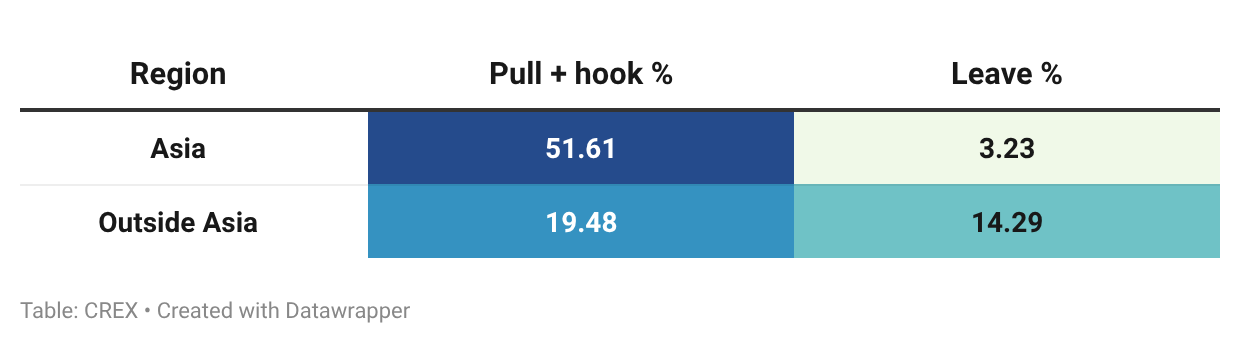
That’s what Iyer always does: finding a way to score for India, including in tough situations. And he has his methods behind it. For example, he leaves or shoulders arms on 14.29% of shorter-length deliveries outside Asia, compared to just 3.23% in the subcontinent.
Some of those glimpses came in Australia last year, when India’s top order failed in consecutive matches. In the opening ODI, Iyer showed good application, leaving the away-going deliveries with angle and movement before an unfortunate strangle down leg on an innocuous leg-side delivery. Then, in the second game, he formed a timely century partnership with Rohit Sharma and scored a valiant 61, laced with solid leaves and defence from time to time.
Additionally, Iyer understands the limitations of his pull and hook shots, so in bouncier conditions, he does try to limit them. On back-of-a-length and short deliveries, he plays these two shots only 19.48% of the time outside the subcontinent, compared to 51.61% in Asia.
In Birmingham, Josh Tongue and Jofra Archer attempted several short stuff after initially testing him with fuller lengths. Instead of taking them on, Iyer mostly worked through square of the wicket with minimal risks to avoid getting out. Against the same opponent in Cuttack last year, he was pulling those very lengths with far more freedom.
Iyer might look ugly at the crease, but runs are runs, ugly or otherwise. It's just that his pull shot comes at a cost and attracts instant attention because of the history surrounding it. That vulnerability becomes even more pronounced on pitches as bouncy and pacy as in New Zealand.
The dilemma around Iyer
In the 2027 World Cup, Shreyas Iyer will face conditions he doesn’t usually face in the subcontinent. But the South African pitches are unlikely to be as extreme as those in New Zealand or Australia last year. The ICC is also expected to ensure more balanced surfaces for a global event, somewhere between the two extremes in India and those Down Under.
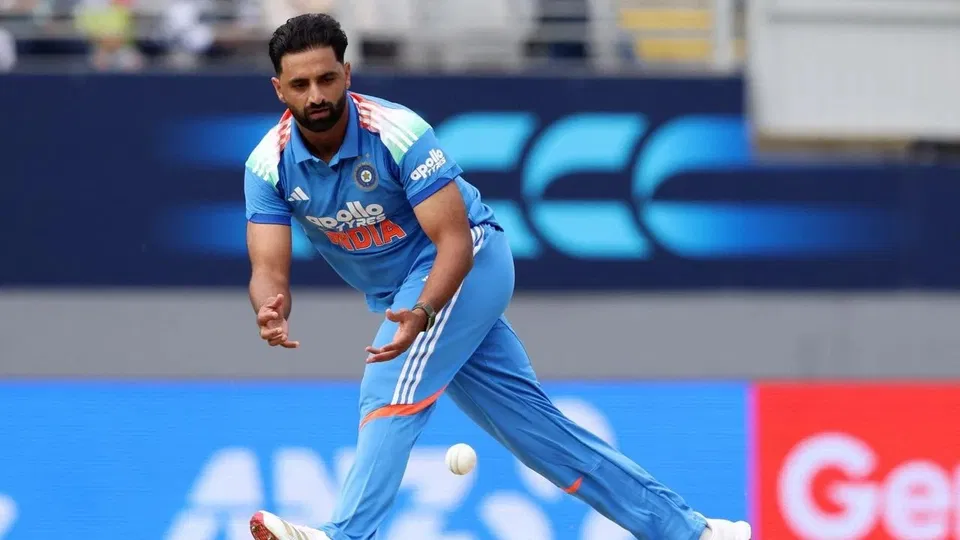
So, it’s not that batting will be out-and-out tricky at the World Cup. And if it is tough, it will be for everyone. But concerns about Iyer’s credentials are still valid.
His short-ball issues are so obvious that pacers begin with this plan almost immediately. There will be a few pitches, especially in Johannesburg and Centurion, with more bounce and pace. Iyer could find himself in trouble at times.
He has toured South Africa three times, in 2018, 2022, and 2023. In six innings across these tours, Iyer has averaged just 25.66 and has a solitary fifty. Four of his five dismissals against pace came from back-of-a-length or short deliveries.
But dismissals from more than three years back shouldn’t be enough to judge him. At least not in Iyer’s case. He has evolved massively since and is better placed to handle all those deliveries, despite still having substantial issues.

Even when viewed more broadly, India don’t exactly have any valid reasons to omit him just yet. A few failures might not be enough to discard him altogether either. Unless there’s a sharp dip in form, Iyer will need to remain their No.4 for the mega event.
India will play multiple series in their World Cup preparation, but most will be in subcontinent conditions. They will play Sri Lanka and Zimbabwe at home, while the Asia Cup 2027 will be in Bangladesh. More matches will surely be scheduled, but it’s hard to see most of them overseas, where Iyer could find more bouncy pitches.
India are well past the stage of experimenting with a new batter, and Iyer’s consistency didn’t allow them to do it before, except when he was injured or playing elsewhere. They need him to keep working on his short-ball problems and find better ways to remain more in control. India won’t mind ugly runs either.
.jpg?type=mq "Pakistan vs Sri Lanka Pitch+Weather")