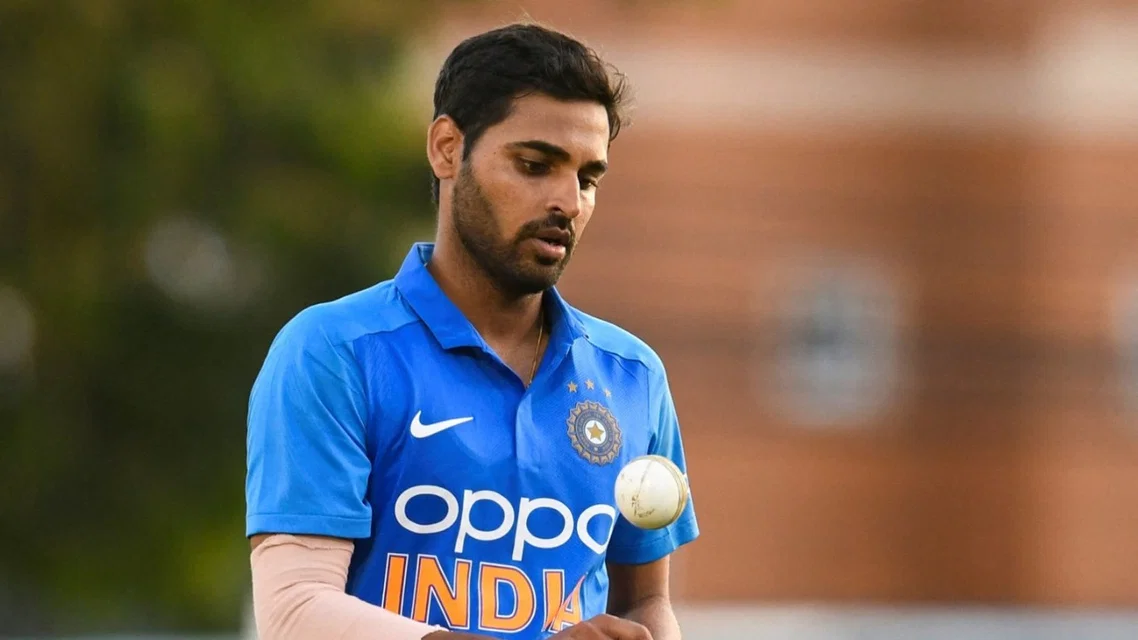
 Bhuvneshwar Kumar could add more dimensions to India's bowling attack. Image Credits: AFP
There are multiple ways to look at Bhuvneshwar Kumar’s return to T20Is. Deserving, maybe, for the herculean effort on otherwise forgiving IPL pitches in the last couple of seasons. Or maybe a decision backwards, considering India have actively invested in young seamers across white-ball formats since moving on from veterans despite so much external pressure.
Either way, Bhuvneshwar’s presence couldn’t be more timely if they wanted to give him another look. The New Zealand conditions could help him settle in easily. This format, anyway, thrives on recent form and rewards it more than any other format.
How Bhuvneshwar Kumar’s presence could help India
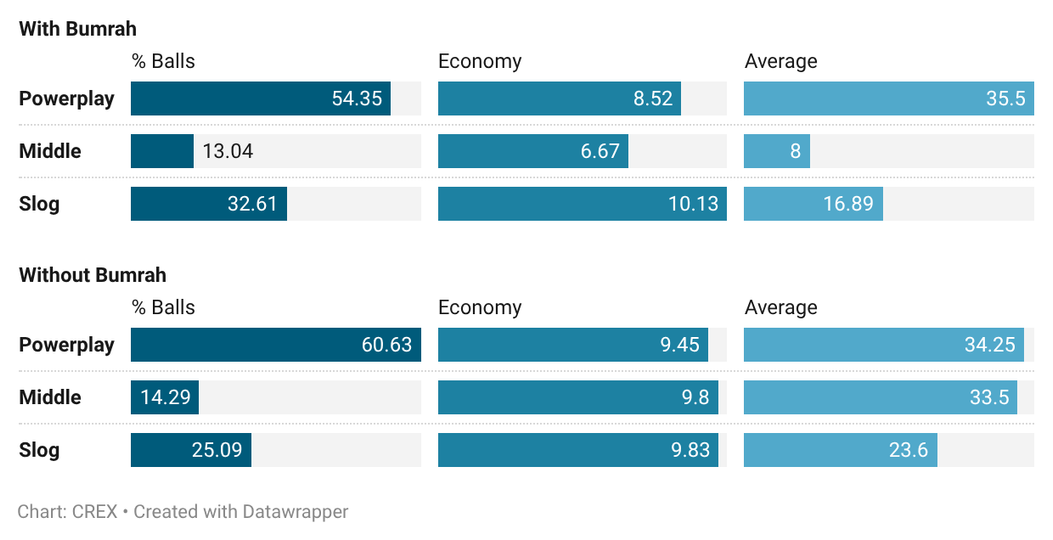 Arshdeep Singh's T20I performances in 2026
For starters, Bhuvneshwar Kumar would ease Arshdeep Singh’s workload in the powerplay. With Jasprit Bumrah no longer consistently available, Arshdeep has had to bowl more overs upfront, leaving India with fewer overs at the death. Hardik Pandya’s absence has further increased his workload, leaving India short of options in the slog overs.
This year, Arshdeep has bowled 54.35% of his overs in the powerplay when Bumrah has played, compared to 60.63% without him. He has also been far more economical with Bumrah around, conceding just 8.52 runs per over in the powerplay. Without him, that figure rises to 9.45.
The extra workload upfront comes at the expense of Arshdeep’s presence at the death, where his share of overs drops from 32.61% with Bumrah to 25.09% without him. In effect, he has to bowl an additional over in the powerplay to cover for the absence of two key players. At times, this has also forced Axar Patel to take on more responsibility in the slog overs.
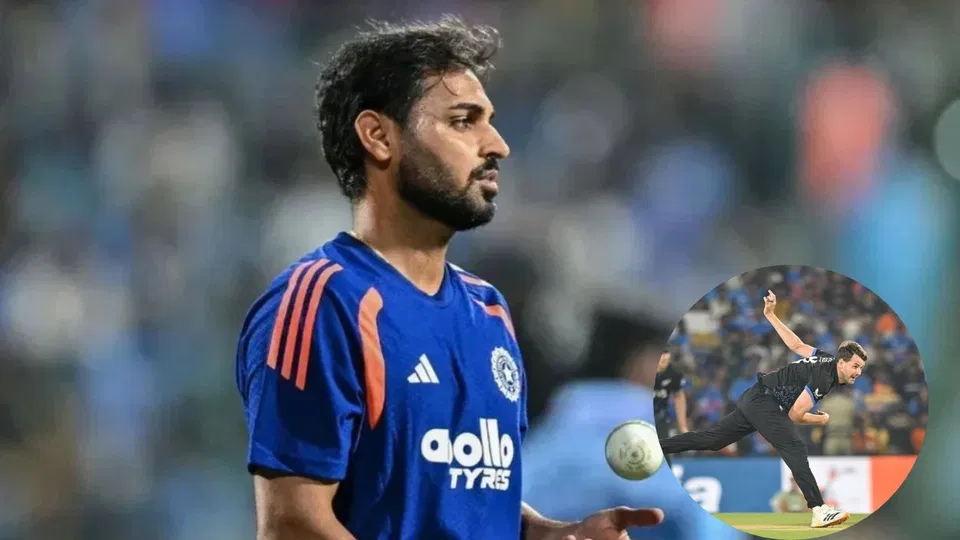
Axar’s value, however, lies primarily in the powerplay. He is one of India’s most reliable operators in this phase, combining defensive skills with the ability to keep batters playing at the stumps. His share of powerplay overs rises to 32.26% when Bumrah plays, compared to just 19.20% without him.
India need him in the powerplay now more than ever due to other concerns in the spin department. Varun Chakaravarthy’s form and injury issues have kept him out of the powerplay in recent times.
Kuldeep Yadav hasn’t received consistent backing, and Washington Sundar is no longer part of the setup. Naman Dhir offers solid defensive skills, but he will need more exposure to unfamiliar conditions before India can rely on him confidently.
The issue was evident in Southampton. India used Arshdeep for three of the first five overs in search of early wickets before bringing in the inexperienced Prince Yadav and the spinners. Arshdeep did a reasonable job but failed to pick wickets, allowing England to attack other bowlers. Axar was then brought on for the 16th over and conceded 20 runs, before Arshdeep returned for his final over in the 17th.

Arshdeep kept things relatively tight again, but with three overs remaining, India had to turn to other options to finish the innings. Shivam Dube rolled his arms in the penultimate over, which went for 22 runs despite producing two wickets. Bumrah’s presence would have given India a better chance to make early inroads while preserving more Arshdeep overs for the middle and death phases, particularly once England’s batters began to attack relentlessly.
These problems become more pronounced overseas, where Indian pacers often have to do heavy lifting upfront. That was evident in Ireland and England, where India repeatedly frontloaded Arshdeep. They will need to do more of the same in New Zealand.
Bhuvneshwar’s attributes suited to New Zealand conditions
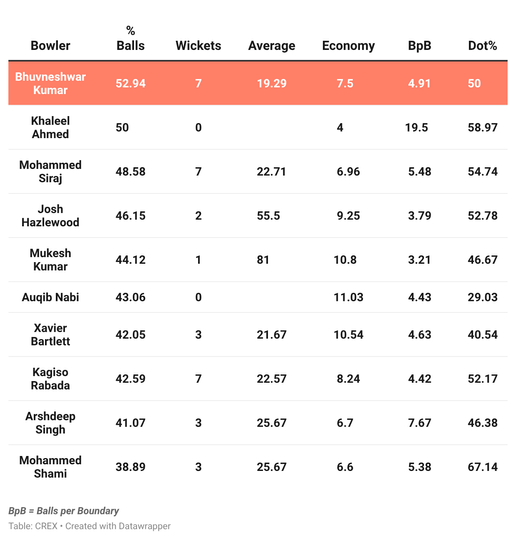 IPL pacers on 6-8 meter lengths in first six overs in 2026
Bhuvneshwar Kumar should enjoy the conditions in New Zealand. The T20Is will be played early in the tour, when the pitches are still fresh, with all matches scheduled under lights. That should give him ample opportunity to exploit early movement with the new ball.
In IPL 2026, Bhuvneshwar found an average swing of 0.94° in the first six overs. However, swing is no longer his only strength. He has increasingly relied on hitting good lengths, which rewarded bowlers even on unforgiving IPL pitches.
This season, Bhuvneshwar bowled 52.94% of his powerplay deliveries between 6 and 8 meters, the highest proportion among all bowlers with at least 60 deliveries. They brought him seven wickets at an average of 19.29.

Take his spell against Mumbai Indians in Raipur, for instance. With some seam movement on offer, Bhuvneshwar repeatedly hit good lengths to extract the most out of the surface and keep the batters unsettled. He eventually removed three crucial batters in the powerplay, helping RCB seize early control of the contest.
Those are precisely the lengths that tend to work well in New Zealand, particularly with the new ball. Even a hint of movement could create significant wicket-taking opportunities. Bhuvneshwar is an ideal candidate to bowl a large share of his overs upfront throughout the T20I series.
His role at Royal Challengers Bengaluru (RCB) has been similar. Bhuvneshwar bowled 53.97% of his deliveries in the powerplay, taking 17 wickets in the phase at an outstanding average of 13.88 and an economy rate of 6.94 in IPL 2026.
Bhuvneshwar’s presence allows India to use Mayank Yadav as a genuine enforcer
India will need three frontline pacers in New Zealand, and Bhuvneshwar Kumar’s presence could give the bowling attack greater flexibility if he can rediscover his best form. Bhuvneshwar and Arshdeep Singh could share the new-ball duties, along with a couple of spin overs.
India would also have Nitish Kumar Reddy as an option. He naturally generates more movement in the air, while his floatier lengths can draw batters into playing away from their bodies and bring edges into play.
That would free Mayank Yadav to take on the role of enforcer in the middle overs. While Mayank has enjoyed some success with the new ball, New Zealand’s conditions could allow him to use his pace differently. Among the available options, he is best suited to exploit his high pace and hard lengths with the older ball.
Mayank has already shown his ability to operate as an enforcer for Lucknow Super Giants (LSG), with 58.17% of his IPL overs coming in the middle phase. In New Zealand, the steep bounce on offer could make him particularly effective, as he can rush batters and cramp them for room with line directed into the body.
That would give India greater flexibility throughout the innings. Much of that, however, hinges on how Bhuvneshwar fares on his comeback trail. If he can replicate his IPL form in New Zealand, India could get the bowling balance they have otherwise missed in Bumrah’s absence.