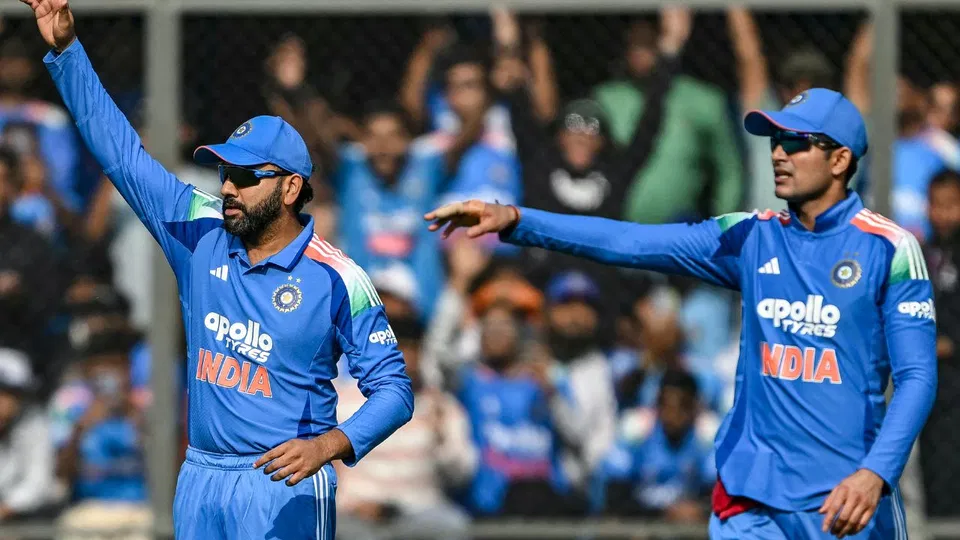
![The Indian cricket team [Source: AFP]](https://onecricketnews.akamaized.net/parth-editor/oc-dashboard/news-images-prod/1784527267921_Indiancricketteam.jpg?type=hq) The Indian cricket team [Source: AFP]
The Indian cricket team [Source: AFP]
Expectations were sky-high when India landed in the United Kingdom. A new T20I captain in Shreyas Iyer replacing Suryakumar Yadav, fresh energy within the squad, and the arrival of teenage sensation Vaibhav Sooryavanshi had generated massive excitement among fans.
The Ireland series was seen as the beginning of India's preparation for the 2028 T20 World Cup, while the England ODIs marked the return of the senior trio of Rohit Sharma, Virat Kohli and Jasprit Bumrah.
Instead, India left the UK with just one victory across both white-ball legs. They were outplayed by England in the T20Is after the opening match was washed out, drubbed 0-2 against Ireland, and managed to win only one ODI in the three-match series against England. More importantly, the tour exposed several concerns that India must address before the next ICC events.
From selection calls to squad balance and bowling depth, almost every department has raised fresh questions for Gautam Gambhir and the team management.
Have India Already Lost Clarity Over 2028 T20 World Cup Plans?
The biggest talking point from the T20I series was India's constantly changing batting combination.
Sanju Samson, the T20 World Cup 2026 Player of the Tournament, struggled badly, scoring just 33 runs in four innings before being dropped midway through the England series.
His replacement, 15-year-old Vaibhav Sooryavanshi, arrived with enormous expectations after a sensational IPL season but managed only 42 runs in three innings before being left out for the final T20I.
The handling of Sooryavanshi raises a genuine question. If India wanted to invest in him for the future, were three matches enough to judge a teenager playing international cricket for the first time? On the other hand, if Samson was still part of India's long-term plans, why was he dropped after four games, only to return immediately?
The Batting Trouble And The Room For Error
The uncertainty wasn't limited to the opening slot. While Shreyas Iyer finished as India's leading run-scorer with 231 runs at an average of 38.50, the team never looked settled around him. Abhishek Sharma produced only one fifty, Tilak Varma showed glimpses without dominating, and India rarely found consistent partnerships.
With Australia and New Zealand set to host the 2028 T20 World Cup, another concern became evident. England's fast bowlers repeatedly troubled India's batters with hard lengths and extra bounce.
India's top order struggled to adapt, raising questions about whether the current batting group is suited for SENA conditions likely to be encountered in the next global tournament.
India's All-Rounder Search Continues Without Any Clear Solution
For nearly two years, India has searched for reliable backups to Hardik Pandya and Nitish Kumar Reddy.
The UK tour offered another opportunity to test several options, but nobody truly cemented their place.
Shivam Dube contributed 130 runs and picked up five wickets in the T20Is, yet his overall impact remained inconsistent. Axar Patel endured a disappointing T20I series with both bat and ball, scoring only 48 runs while taking four wickets at an average above 54.
Also Read- List Of All Indians On Lord’s Honours Board
Even in the ODIs, India continued to prioritise batting depth over specialist bowling options. Axar finished with five wickets and contributed useful runs, while Washington Sundar delivered a fighting fifty in the final ODI after replacing the injured Harshit Rana. However, the larger debate remains unchanged.
Is India sacrificing specialist bowlers to accommodate extra all-rounders? And more importantly, is that strategy actually making the side stronger?
ODIs Revived The Seniors But Exposed India's Middle-Order Concerns
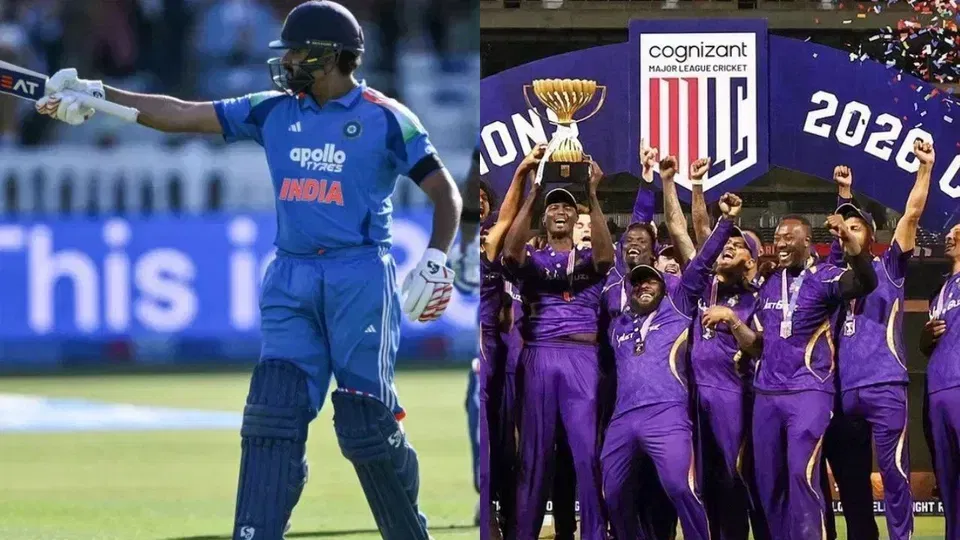
The ODI series painted a slightly different picture. Rohit Sharma, Virat Kohli and Shubman Gill all performed well. Rohit smashed a century and finished with 175 runs, Gill averaged 94 with 188 runs, while Kohli returned from injury to score 144 runs in three innings.
The experienced trio showed they still possess the quality to compete at the highest level. However, the performances behind them once again exposed India's lack of stability.
Shreyas Iyer had one good innings but failed to convert starts consistently. KL Rahul managed only 13 runs in two innings. Apart from Axar Patel and Washington Sundar rescuing India lower down the order in patches, the middle order rarely looked capable of finishing games.
As Rohit approaches 40 and Kohli continues in the latter stages of his career, India still does not have a settled succession plan in the 50-over format.
Beyond Bumrah, Who Leads India's Bowling Attack?
Perhaps the biggest concern from the entire tour remains India's bowling. Jasprit Bumrah once again looked India's most reliable fast bowler despite playing only two ODIs. The problem is what comes after him.
Arshdeep Singh was India's leading wicket-taker in the T20Is with eight wickets, while Harshit Rana impressed before injury cut short his campaign. Prince Yadav showed promise but lacked consistency, whereas Prasidh Krishna struggled to make an impact in both formats.
The ODI series highlighted the issue further. Bumrah's economy remained outstanding, but India lacked another bowler capable of consistently controlling the game from the opposite end.
Gurnoor Brar leaked runs, Prasidh Krishna failed to dominate, and India's pace attack often looked one-dimensional without Bumrah leading every spell.
With the ODI World Cup approaching in South African conditions over the next cycle, India's over-dependence on Bumrah has become increasingly obvious.
India's SENA Struggles Are No Longer Just A Coincidence
India have established themselves as one of the most dominant white-ball teams in home conditions over the last decade. However, every overseas setback seems to revive the same debate, are India still struggling to consistently conquer the SENA nations?
The disappointing UK tour has once again highlighted a problem that has followed Indian cricket for years. Whether it is England, Australia, South Africa or New Zealand, India has often found it difficult to replicate the consistency they enjoy at home.
In ODIs across SENA countries, India has won only 129 of their 303 matches while losing 155, giving it a win-loss ratio of just 0.83. Their T20I record is slightly better with 36 wins and 27 defeats in 72 matches, but England remains a major concern, where India have won only six of their 18 T20Is.
The recent UK tour only reinforced those concerns. India continues to be a powerhouse in familiar conditions, but success in ICC tournaments often depends on winning in foreign environments.
This tour has therefore revived an uncomfortable question with the T20 and ODI World Cup in SENA countries. Has India truly solved its overseas puzzle, or does it still remain a team that looks far more formidable at home than it does in SENA conditions?
One Win, Countless Questions
Results alone never define a tour, but this one has left India with several difficult decisions.
Should the management continue backing Shreyas Iyer as captain for the next T20 World Cup cycle? Is Vaibhav Sooryavanshi genuinely part of India's long-term plans?
Has India become too dependent on batting all-rounders at the expense of specialist match-winners? Who partners Jasprit Bumrah in major ICC tournaments? And perhaps most importantly, who will eventually replace Rohit Sharma and Virat Kohli when the time comes?
All these questions remain unanswered as the Men in Blue voyage to Zimbabwe for a three-match T20I series before taking on Sri Lanka for the Test series.
Also Read- Gautam Gambhir’s Management In New Scandal- Half Fit Players Being Pushed For Face Saving