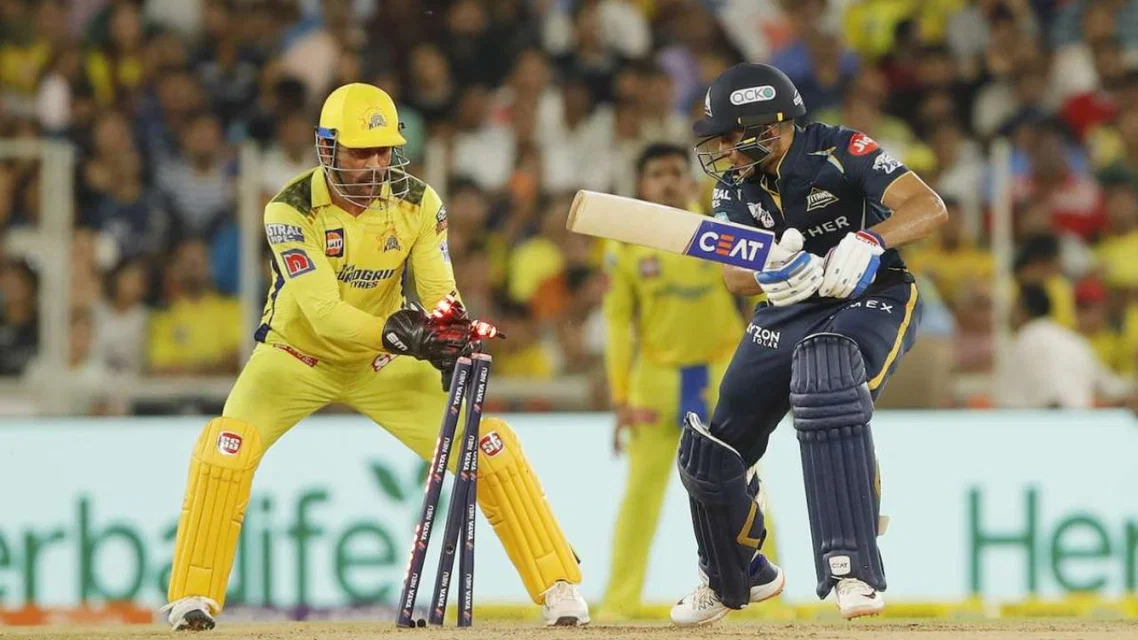
 MS Dhoni stumping (Source: X)
The fastest stumping in IPL history may not be recorded at all. It may be an estimate. That sounds strange for a tournament equipped with high-level technology like ball-tracking, ultra-motion cameras, and detailed performance data.
Yet when fans argue about the quickest stumping the league has ever seen, they are usually relying on television graphics, broadcaster analysis, or frame-by-frame video reviews rather than the official record, which is centred on the question.
That is why the gap between what is evident and factually true makes former Chennai Super Kings (CSK) captain MS Dhoni's long-standing reputation so intriguing.
It is worth noting that the debate is not simply about whether he owns the fastest stumping. Rather, it is about why, in a sport obsessed with data and statistics, one wicketkeeper has become the benchmark against which every quick stumping is judged.
Available evidence puts MS Dhoni at the podium for fastest stumping in IPL
Over the years, MS Dhoni’s quick stumpings have been timed only by broadcasters and cricket publications.
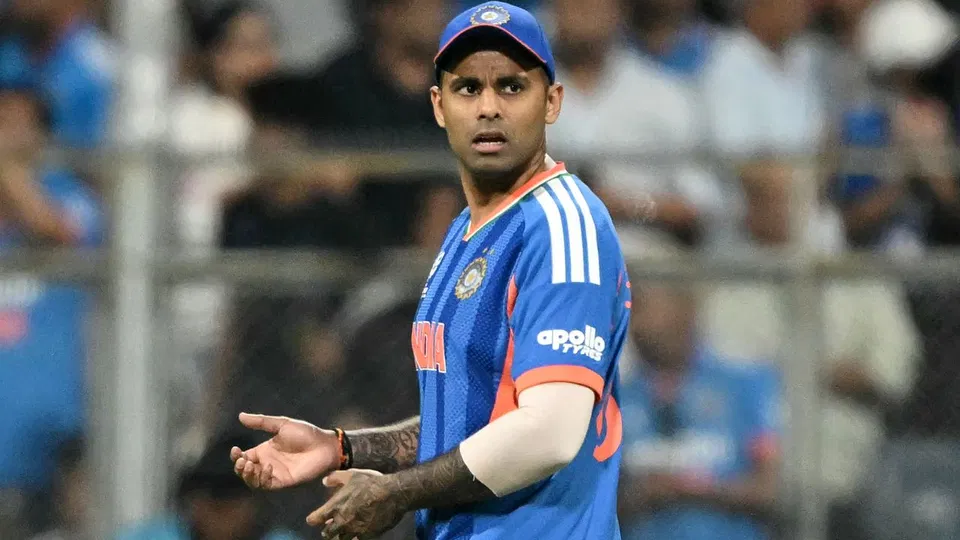
The example of which is his dismissal of Shubman Gill during the IPL 2023 final. As per the publicly available reports, his stumping was recorded at around 0.10 seconds. Moreover, his stumpings of 2026 World Cup winning captain, Suryakumar Yadav and Phil Salt during IPL 2025 were also recorded at approximately 0.12 and 0.16 seconds, respectively.
However, above all, multiple reports have also cited a 2019 IPL stumping timed at 0.08 seconds. While none of these timings come from a standardised IPL record book, they consistently place the legendary Indian captain in territory only a few wicketkeepers have come close to.
This is where distinction matters!
Also read: Why Shreyas Iyer Doesn't Deserve India's T20I Captaincy
Notably, when cricket fans hear "fastest stumping," they often assume it is measured like a sprint, with a ticker in hand. But it is not. Different broadcasters can use different frame rates, replay systems, and timing methods.
Some measurements begin when the ball reaches the wicketkeeper's gloves. Others start when the batter first loses contact with the crease. The result is that two stumpings with identical physical speed can receive different reported timings.
The IPL has never published an official leaderboard for stumping reaction times. As a result, any ranking of the fastest stumpings remains solely dependent on broadcast measurements and media reporting rather than a league-certified statistic.
Even with those limitations, an interesting pattern emerges when publicly reported IPL timings are compiled into a single dataset.
Reported lightning-fast IPL stumpings:
| Wicketkeeper | Reported time | Season |
| MS Dhoni | 0.08 sec | 2019 |
| Jonny Bairstow | 0.10 sec | 2019 |
| MS Dhoni (Shubman Gill) | ~0.10 sec | 2023 |
| MS Dhoni (Suryakumar Yadav) | 0.12 sec | 2025 |
| Rishabh Pant | 0.12 sec | 2018 |
| Parthiv Patel | 0.13 sec | 2015 |
| MS Dhoni (Phil Salt) | 0.16 sec | 2025 |
These figures should be treated as reported timings rather than official records. Even so, one detail stands out. Dhoni appears repeatedly.
Hence, the discussion shifts from numbers to skill. A stumping is not just an instinct, but a calculated move. The wicketkeeper, standing behind the three stumps, must anticipate the batter's movement, read the spin, collect the ball cleanly, and remove the bails without wasting time and motion.
It has evidently been seen that even at the biggest stage, some keepers often begin preparing for the dismissal before the ball has reached them.
This is one reason former players-turned-experts and commentators frequently describe Dhoni's technique as the benchmark. Rather than catching the ball and then moving toward the stumps, he often completed both actions in one continuous movement. The ball rarely stopped in his gloves.
Also read: 3 Options Better Than Shreyas Iyer To Captain India In T20Is
The result was that his stumpings looked faster than conventional wicketkeeping mechanics.
That does not mean other IPL keepers lack elite skills. Rishabh Pant's best work behind the stumps has produced reaction times comparable to some of the quickest reported dismissals in the league.
Jonny Bairstow and Parthiv Patel also feature in publicly reported timing lists. More recently, keepers such as Sanju Samson have produced dismissals that immediately invite comparisons with Dhoni.
The comparison itself is revealing. When a wicketkeeper pulls off a remarkable stumping, the reference point is almost always the former CSK captain.
Once again, the reason is not just the speed.
Dhoni’s reputation as one of the best wicketkeepers in the world was built across hundreds of matches and dozens of stumpings. In 2025, he became the first wicketkeeper to reach 200 IPL dismissals, including 47 stumpings.
The myth bursts but the strongest conclusion emerges
Safe to say, the available data and recorded timings do not allow anyone to prove a particular stumping is the fastest in IPL history. Thus, the game of cricket does not depend on the statistics around the precision required for a definitive record.
The evidence shows that whenever reported timings are mentioned, Dhoni appears again and again near the top of the list. That consistency explains why he remains the benchmark. This proves the argument that Dhoni's case is not built on one famous stumping. It is built on a pattern that has endured for almost two decades of IPL cricket.
While, due to the lack of credible evidence, the fastest stumping may remain debatable. But the wicketkeeper most closely associated with fast stumpings is certainly not.
Also read: Australian Umpire Completes Century, Joins Rare List In England vs New Zealand Test