 Image Credits: AFP
Bowling in modern-day Test matches comes with its own challenges. With the World Test Championship (WTC) incentive, most pitches favour bowlers and reward result-oriented play. While that has its perks, it also brings greater scrutiny.
The challenge is twofold for Indian pacers. At home, they need to play second fiddle on spin-friendly decks, with their role largely confined to supporting acts. Away from home, they are expected to thrive in seam-friendly conditions, but what works on subcontinental pitches doesn’t necessarily translate elsewhere.
There are certain adjustments required that vary with conditions. Even the finest of the seamers have taken multiple tours before finally making those adjustments, while some have failed to make the transition altogether. It’s hard to challenge muscle memory.
Considering that, Prasidh Krishna’s growth has been particularly quick and impressive, even if popular perception suggests otherwise. After his first 10 Tests, he has 35 wickets at 31.25 runs apiece. He takes a wicket every 47.5 deliveries, the second-best frequency among Indian seamers with at least as many wickets as Krishna.
Prasidh Krishna keeps honing his skills
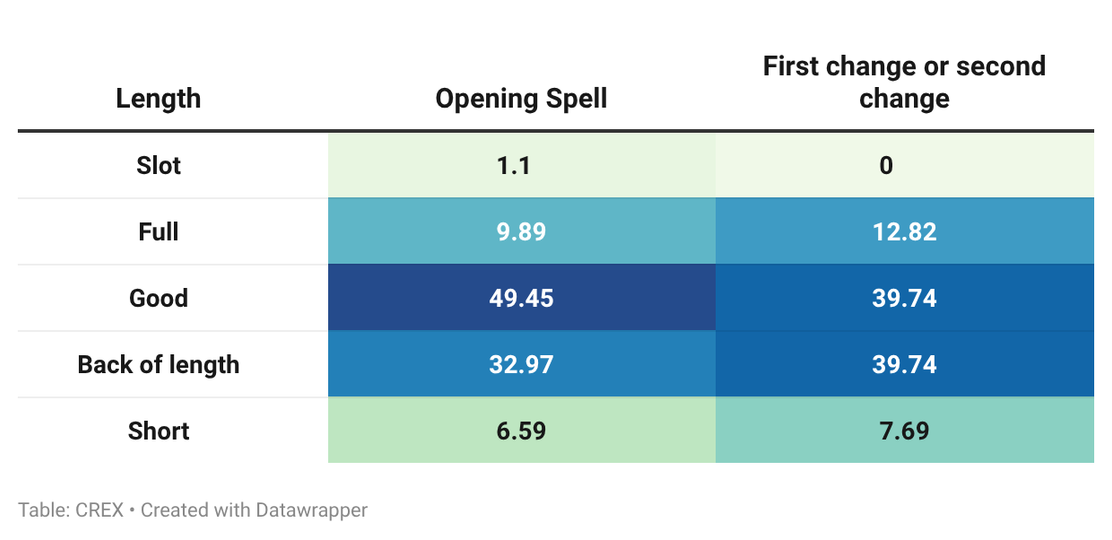 Prasidh Krishna's lengths in 2026
These numbers look even more impressive when you consider the variety of roles he’s already been asked to perform, often in vastly different conditions. Nine of his 10 Tests have been away from home, seven of them overseas. In these games, Prasidh Krishna has been entrusted with different roles, either because of his attributes or the team’s requirements.
For instance, he shared the new ball in the one-off Test against Afghanistan and in three of the four innings in Sri Lanka. He also bowled upfront once each in Sydney and at The Oval.
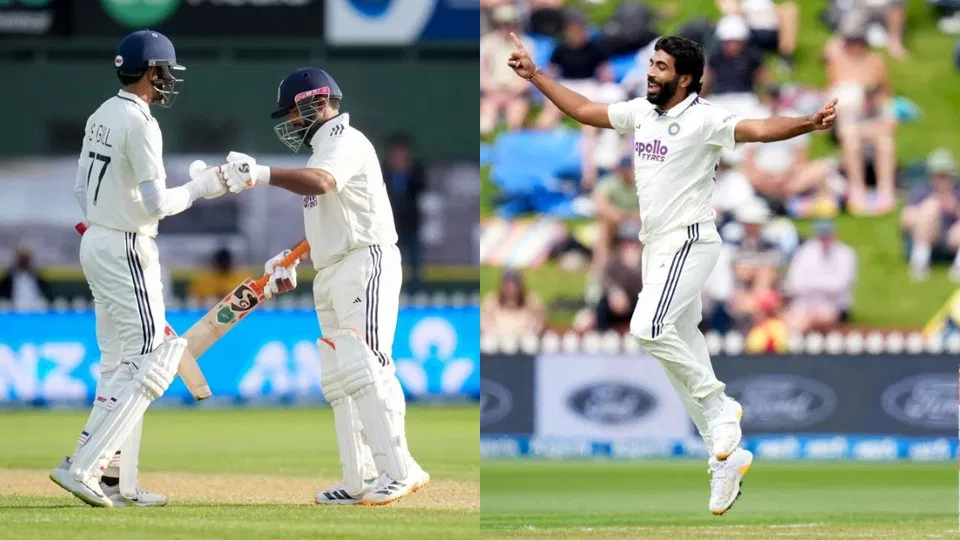
In other matches, India have used him as a first or second-change seamer, asking him to bend his back and hit the deck hard. He played a similar role in the recently concluded Test at the Basin Reserve too.
For someone still relatively new to the setup, that’s among the least effective ways to help him settle in. But India have had valid reasons to use him differently at times.
In most games where Krishna didn’t share the new ball, Jasprit Bumrah and Mohammed Siraj, two of the more established and accomplished pacers, opened the innings from both ends. On a couple of other occasions, Akash Deep and Anshul Kamboj took that role because their attributes require better bowling conditions outside home to succeed.

Yet Krishna has also found ways to create impact from time to time and learn along the way. For instance, he skillfully shifted to fuller lengths in his opening spells against Afghanistan and Sri Lanka, with around 49.45% good-length deliveries between 6 and 8 metres. Another 11% were fuller than 6 metres.
“The work's been going on for quite some time now (on trying to pitch the ball a little fuller). We've been working on lengths, be it whatever format I'm playing. Morne (Morkel) has been in my ears for quite some time, and I'm happy to be bowling well,” exclaimed Prasidh Krishna after his five-wicket haul against Afghanistan in Chennai.
More important has been his increased zip on fuller lengths, which helps him bring outside edges into play. Earlier, Prasidh Krishna often became too floaty while pitching closer to the batters, losing his natural pace and carry. That’s also why he was reluctant to alter his stock lengths and go fuller even on helpful pitches earlier.
He now seems to drive through his crease and snap his wrist with the same effort he uses for shorter lengths to eliminate the float. He always had deceptive release points, which remain largely unchanged whether he bowls fuller or shorter lengths and give the batters little clue. With greater force behind his fuller lengths, Krishna becomes harder to pick, even when he’s not necessarily bowling quick.
Lahiru Udara was naturally on the back foot and expected the pacer to keep his lengths slightly shorter in Colombo. But Krishna pitched it just fuller than back of length and found extra bounce, which forced him to play. Udara could only get an outside edge as the ball straightened just enough after pitching.
That’s another element added to his repertoire. He has also worked on developing an outswinger to complement his inswinger and becoming more effective with the wobble seam. Both were evident in abundance in England last year, where he showed rapid improvements as the tour progressed.
The old-ball impact
Prasidh Krishna’s natural attributes have always been enticing and fit the profile India’s current management wants. No wonder he was preferred even when India needed just two seamers against Afghanistan and Sri Lanka on wickets that were hardly conducive to fast bowling. He’s expected to bowl a dual role with the new and old ball.
After the pitch deteriorated in Galle, India didn’t start with pace on both ends and instead used Manav Suthar with Mohammed Siraj in the final innings. Krishna came to bowl only in the 11th over and had to play an enforcer role. While this role comes naturally to him, the pitches weren’t quick enough, and he had to create his own pace from shorter lengths.
He did so almost immediately when Kamindu Mendis was left in two minds on a climbing back-of-a-length delivery that bounced more than he anticipated. He could only edge it to first slip. Even Niroshan Dickwella couldn’t alter his length despite moving around the crease and eventually succumbed to a short ball.
Similarly, Prasidh Krishna again had to hit the deck hard on a lifeless Wellington pitch, where bowlers were in play only in the first session of the first day.
He looked short on rhythm and pace initially, possibly a consequence of an untimely injury against the West Indies at home. He subsequently missed the ODI series against New Zealand, while his India A appearance was limited to five overs due to rain.
To make matters harder, India immediately asked him to do the toughest job - bowling shorter lengths into the breeze on a docile pitch on his return.
Ideally, he should have started from the favourable end to ease in, and his improved zip on fuller lengths would have been handy too. But with Mohammed Siraj not playing, India had little choice but to task Prasidh with this role since he’s quicker than Akash and Anshul.
However, as the game progressed, Krishna slowly regained his rhythm and became the most threatening bowler in the later phase, when other pacers from both sides were simply going through the motions.
He induced just 10.90% false shots in the first innings, compared to 18.42% in the second. On the final day, he was the most threatening of the four pacers, with 16.67% false shots.
That was evident when he generated an upward variable bounce out of nowhere, even when the bounce was mostly on the lower side, to remove Rachin Ravindra. Even late into the day, Krishna created a couple of chances after Daryl Mitchell and Glenn Phillips stitched a big stand. In both innings, he bowled more short balls - 45.86% in the first innings and 50% in the second - than all other Indian pacers, despite bowling nearly as many overs.
He also did a similar thankless job in Sri Lanka. With Siraj’s lacklustre rhythm and pace, Krishna had to do the heavy lifting in the pace department every time. He was still the most impressive fast bowler in the rubber.
Prasidh Krishna can be frustrating on some days. But the truth is, every Indian pacer, except Bumrah, has come through a similar learning curve over the years. The difference is that during India's peak years of fast bowling, most of those seamers had already been on two or three overseas tours, making adaptation significantly easier.
Another truth is that Krishna has evolved quicker than most Indian pacers. At 30, he is entering the stage of his career when fast bowlers tend to peak. Prasidh Krishna seems to be getting there too, even if his bad days often overshadow his recent progress.