




 Image Credits: AFP
At one point in the final session, Sunil Gavaskar urged Washington Sundar to turn to leg-spin on Day 5. Later, with an hour and a half still left in the game, Rishabh Pant tried to inject some life into an otherwise weary Indian unit, chirping away, ‘Keep believing, boys’. He even jokingly floated the prospect of Yashasvi Jaiswal becoming an all-rounder when the opener was handed the ball in the dying moments.
It was that kind of day at the Basin Reserve. Or, more accurately, that kind of Test match. Runs upon runs, session after session, and precious little movement.
An avid reader sat in the stands, engrossed in A Dance with Dragons over the first four days, turning pages at a pace that seemed remarkably in sync with the proceedings out in the middle.
Then there were students from Wellington College, presumably making the most of their lunch break by watching the slow burner in their college uniforms on the free-entry day. Their most animated moment came when they appeared on the big screen, prompting a couple of them to turn away from the camera.
The impromptu game of cricket among youngsters unfolding on the sidelines of the grassbank around the picket fence, with a safety cone serving as a makeshift stump, offered considerably more action and excitement.
One boy bowled a well-directed yorker at pace that somehow evaded the cone. Even so, it came closer to producing a wicket than anything either side managed in the middle for most of the Test.
And yet, India arrived on the final day with a glimmer of hope, with eight wickets still to take. To their credit, they never let that hope turn into desperation and rather stuck to their process. After all, that’s all they could do on a surface that barely offered anything except, of course, runs.
India’s efforts on Day 5
When Anshul Kamboj and Jasprit Bumrah started the proceedings on Day 5, they spent the first few overs trying to understand what could possibly work there without actually being too loose with their lengths.
Kamboj, for instance, started with slightly fuller lengths from over the wicket to see if there was any lateral movement. Soon, he shifted to around the wicket, ending his first over by creating an away angle from a shorter length.
Bumrah from the other end showed his superior skills by first bringing one in to Devon Conway before taking the next away to test the outside edge. Later, he straightened his line to finish the over and see if the ball was holding up a bit.
India had placed fielders for both possibilities. Instead of a traditional first or second slip, KL Rahul was at gully just in case the batters pushed away from their bodies on a dry surface. And there was a short leg for the one angled in.
Kamboj also tried to create an inward angle before taking it away from Rachin by going wide of the crease. He also slipped in a couple of off-pace deliveries to induce a possibility of a leading edge. On such a surface, none of those tactics worked, despite being executed with a fair margin.
That meant Washington Sundar had an early bowling opportunity after the initial burst of two pacers.
He began bowling into the wind, allowing the ball more time in the air to curve sideways and amplifying his already strong drift. Bowling into the wind made length control challenging, but the trade-off played to his strengths.
There was little to no rough to exploit, and the odd cracks hadn't dried out enough to offer much assistance either. The first four days had lacked the customary gusty Wellington winds, with the heavy breeze arriving only on the final morning. So, drift was the only way to create something.
And Sundar did make the drift count. Devon Conway tends to defend towards cover with an angled bat, so the spinner drifted one with a loopy trajectory that kept coming in and took the inside edge before thudding into the pads. Pant was vigilant enough to grab it just in time to his left.

Soon, the fielder at gully came into the picture too, just as India would have hoped. Prasidh Krishna created an away angle, and Rachin went for an expansive drive away from his body with hard hands. The ball just stopped a touch before the angle forced him into the shot, and Rahul took a well-judged catch.
And yet, even after losing two quick wickets, New Zealand had little reason to panic. India had dried the flow of runs, conceding just 38 across 26 overs in the first session, but Daryl Mitchell and Tom Blundell had every reason to keep blocking their way through.
There was virtually no uneven bounce or lateral movement to contend with, and this was hardly a surface where an ultra-cautious approach was destined to fail.
More chances and a wicket, but the game ends in a tepid draw
India continued to manufacture chances in the second session. One came as early as the third over after the break, when Daryl Mitchell set off for a single almost on his own, with his partner at the other end merely watching the ball.
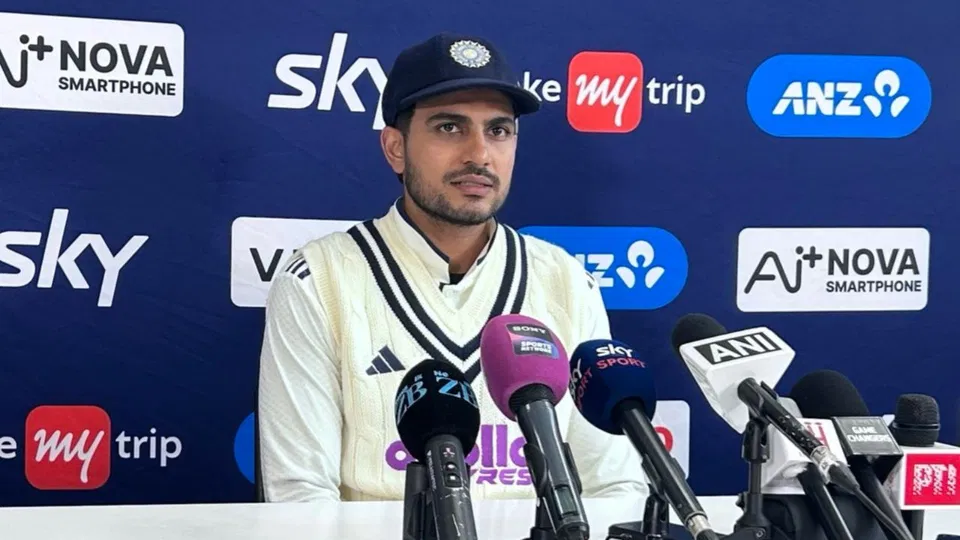
Akash Deep, however, made a mess of a straightforward run-out opportunity, leaving Shubman Gill visibly furious, even if he chose not to express it.
Gill would soon have reason to smile again, even break into a little jig, after Kamboj found a way to prise Blundell out.
This wicket had an interesting pattern. After starting his overs with fuller lengths before gradually shifting towards shorter ones over the preceding three overs, he changed tack in the wicket-taking over.
Kamboj instead mixed shorter ones deep into his over before just flicking his finger a bit to take the ball away on the final delivery. Perhaps the lack of movement off the surface worked in India's favour here, as the ball didn’t deviate enough to beat the outside edge.
Blundell looked to defend but got the faintest of the edges, so faint that even Pant couldn't hear it. Fortunately for India, the close-in fielders on either side heard and reviewed it successfully.
And yet, India were never really on top of the game. Glenn Phillips, arguably the batter of the tour, joined Daryl Mitchell in the blockathon and simply refused to budge.
In the first innings, he had been the aggressor, walking into a collapse of five quick wickets and releasing the pressure with some proactive strokeplay.
On the final day, however, Phillips was perfectly content to defend virtually everything thrown at him for the remaining session and a half. The pitch allowed him to embrace both extremes.
At one point, KL Rahul even flipped the bails in the hope of changing India's fortunes, but no ritual would work when even the new ball isn’t doing a thing.
Jasprit Bumrah and Akash Deep took the new ball, but couldn't manufacture a single genuine chance. More than anything, there was simply no assistance on offer.
Mitchell did provide a fleeting opportunity when he gloved a nip-backer towards short leg, but India had nobody stationed there.
India responded by crowding the bat, stringing together another set of seven consecutive maiden overs. But New Zealand knew exactly what was required - keep occupying the crease and let a tiring bowling attack do the hard work. Runs were hardly a concern, especially after a mountain of them already made throughout the match.
The second new ball made matters even worse for India. The bounce became more consistent, taking away even the occasional shooter that had offered a semblance of uncertainty earlier.
By the time the second session ended, India were running out of ideas as much as they were running out of time.
What followed was a series of fielding and bowling changes, as India began throwing their final dice. Sundar, for instance, started twice around the wicket before switching to over the wicket after Tea. Kamboj initially had silly point and short leg in place, before the silly point was moved to short mid-wicket.
For perhaps the first time all day, India were trying to force something out of the game. They even brought back an increasingly exhausted Bumrah for another burst, but he looked no more threatening than the others. India threw everything they had at New Zealand, but nothing could shift a game that had long settled into its own rhythm.
In hindsight, India could have left the cover region vacant more often and brought another fielder around the bat earlier in the day, increasing the possibility of finding an outside edge. A few more experiments with fuller lengths at varying speeds might also have been worth exploring.
Bumrah, after all, has a history of producing timely slower balls and had already induced a mistimed shot earlier in the day. But he was visibly running on empty, much like the rest of the pace attack. With virtually no grip on offer, it is hard to say whether any of those alternatives would have made a difference.
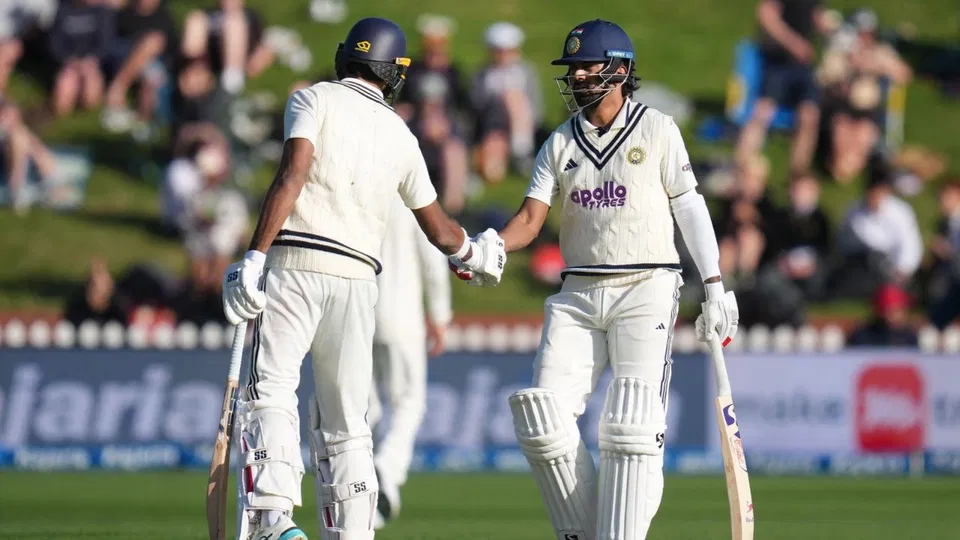
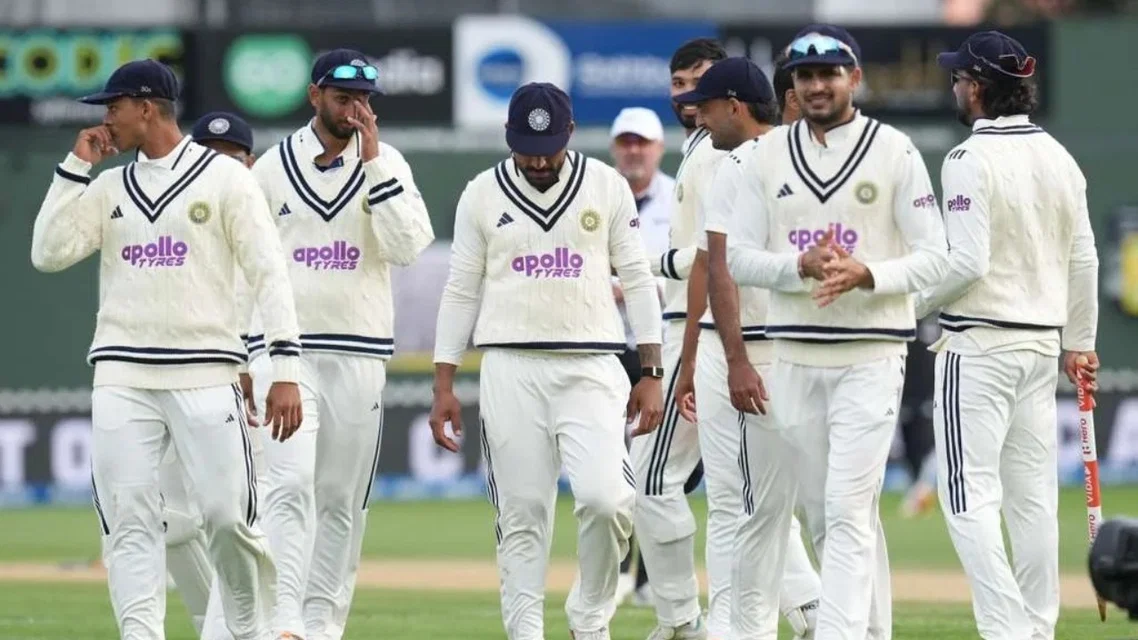
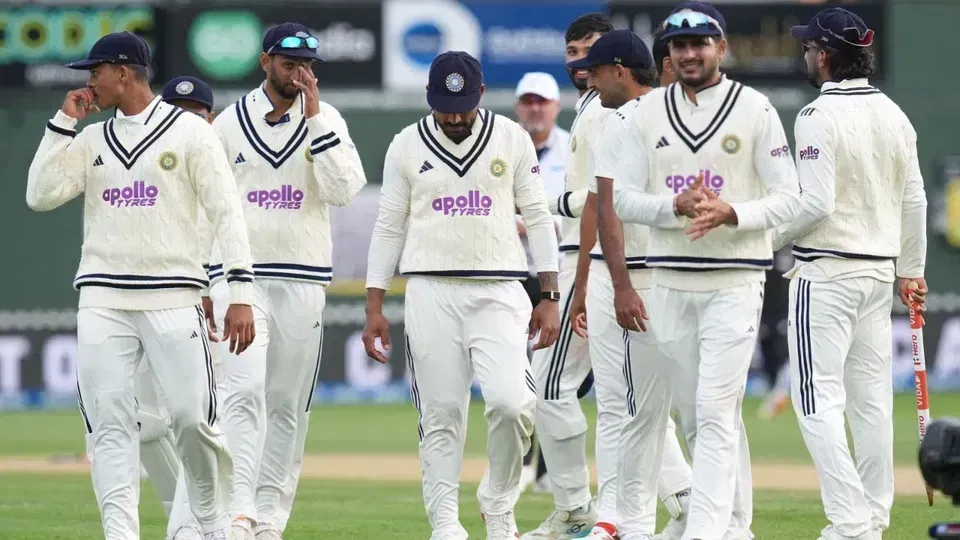
And so, the inevitable handshakes arrived. It was only fitting that both teams end the misery before the final hour even got underway. India had used as many as eight bowlers, shuffled them across spells and ends, and tried almost everything at their disposal for just three wickets in the day.
The Wellington wind was perhaps the only thing capable of unsettling the batters, and it did so on several occasions on the final day. But it, too, came into its own at a leisurely pace, much like the Test itself.