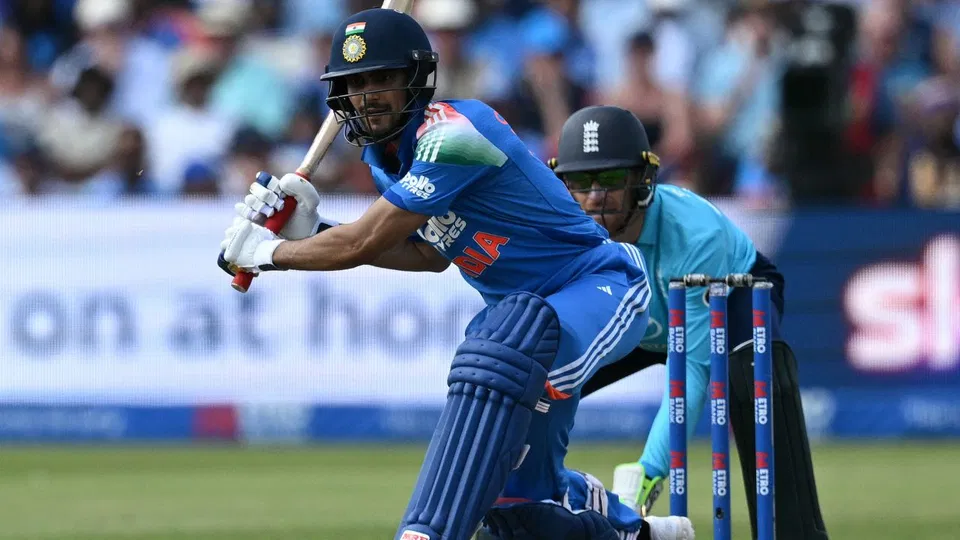
Shubman Gill has been aggressive as a captain. Image Credits: APCaptaincy will always be a result-oriented debate, irrespective of who’s at the helm. Shubman Gill, in that sense, has had a mixed start in both ODIs and Tests.Still, the early patterns in his leadership methods are encouraging, particularly in the 50-over format. Gill has a certain way of using his troops that has, so far, looked proactive and worked in his favour.Shubman Gill’s aggressive captaincyWhen Gurnoor Brar dismissed Jacob Bethell and Ben Duckett in the same over, India saw an opening for the first time in Birmingham. Before that, they had kept Bethell quiet, but Duckett had won the powerplay for England.As two new batters came to the crease, Shubman Gill quickly removed Washington Sundar and gave Jasprit Bumrah another spell. Bumrah had finished a four-over spell some time back and was the most threatening bowler so far, as expected.However, Gill would have been justified in continuing with Sundar from the other end. After all, India had to get 10 overs from him and Shivam Dube combined, and with two new batters in, this was the easiest phase to get a few overs out of them.Still, Bumrah was called immediately and asked to make further inroads on a deck offering some seam movement after the initial swing. One thing is to bring the main bowler in for wickets, and another to back it up with attacking fields.Gill was prudent enough to put a slip, knowing that the pacer would take the ball away from Harry Brook. That’s precisely what happened: a back-of-a-length delivery seaming away, and the extra bounce meant that Brook could only get an outside edge and hand a straightforward catch to the first slip.Later, he took Gurnoor out of the attack and brought Prasidh Krishna from his end for another spell. The move paid immediate dividends, with Krishna dismissing Jos Buttler and Sam Curran in the same over to further dent England's chances of a revival.Amid all this, Shubman Gill remained mindful of his pacers' workload, resisting the temptation to overbowl them on a day when the UK heatwave had taken its toll on several players at Edgbaston. After frontloading pacers, he ensured extended spells for Axar Patel and Shivam Dube, with no more than a four-over spell for any of the three specialist fast bowlers.Shubman Gill used pacers wiselyEven when Brar had to walk off the field in the 48th over, Gill didn’t use Jasprit Bumrah, who had an over left. Instead, Axar came to deliver the over in Brar’s place and finished the innings.Gill’s proactive methodsShubman Gill has made this aggressive use of his bowlers a recurring feature of his captaincy. Be it IPL or international cricket, he never shies from frontloading his main seamers to break the game then and there.During the Afghanistan rubber, Prasidh Krishna bowled a sensational opening spell in Chennai, where his natural lengths were mighty effective. Gill rewarded him with an extended five-over spell in the powerplay and kept using pacers from both ends by the end of the 16th over.Also Read: India Must Prioritise 4 Seamers Over Shivam Dube in England ODIsSimilarly, Gujarat Titans hardly used spin in the first six overs and always played an extra seamer in their bowling XI. Mohammed Siraj and Kagiso Rabada were powerplay wicket-takers, while the likes of Prasidh Krishna and Jason Holder took care of the middle overs.A pacer remains in the attack from at least one end under Gill. That shows his instinct to hunt for wickets rather than letting the game flow in a certain way.He seems to understand how to maximise his pace overs and get more wickets, even if that means using spinners in unconventional phases. Few do it as aggressively as Gill.Why Shubman Gill’s aggressive captaincy works for IndiaIndia are in a tricky phase in white-ball cricket at the moment. They are without their premium all-rounder, Hardik Pandya, while Nitish Kumar Reddy, the next in line, is also sidelined with an injury.So, the bowling department always looks a bowler short, since an all-rounder with low value, such as Shivam Dube, gets picked for balance. Now, Shubman Gill’s options are already limited, and he has to ensure the maximum value from them.One way is to use them in low-scoring phases, and the other is how Gill used them against England at Edgbaston. His aggressive methods can put the team in trouble when the key bowlers don’t earn wickets, but this tactic still gives them the best chance to break the game.Sony Sports Network @SonySportsNetwk Play. Miss. Repeat. 😮💨 The seamers were right on the money. ⚡ They had England playing and missing throughout the opening spell. Watch the 1st ODI of #ENGvIND, LIVE NOW on Sony Sports Network TV channels. #SonySportsNetwork #MamlaPersonalHai #ExtraaaInnings Jul 14, 2026, 6:22 PM A part-timer, or an underdeveloped bowler, will anyway be vulnerable at all times and hardly give confidence. Using main pacers upfront at least gives them a chance to use them later against lower-order batters, particularly during the rebuilding phase.Once Hardik returns, Gill will have more options to rotate without a significant dip in quality. Then, his aggressive methods will reap further rewards.The introduction of new pacers like Gurnoor Brar and Prince Yadav suggests India are preparing well for the next World Cup in South Africa, where they will need to play an extra seamer. Fortunately for them, Shubman Gill will make sure to use them aggressively and give the best chance of succeeding with his attacking captaincy.Also Read: Rohit Sharma Gets Clear Message From Gautam Gambhir Before For 2027 World Cup