India have struggled to settle their middle-order in the 50-over format ever since the 2023 ODI World Cup final defeat.
While KL Rahul has moved away from the No. 5 role, Hardik Pandya remains the designated finisher and Axar Patel has not been a consistent part of the ODI setup.
In that vacuum, the team management experimented with Washington Sundar at No. 5 during the ODI series against South Africa on home soil.
India's Experiment At No. 5 Is Not Yielding Good Results
The experiment didn't deliver convincing returns for the Indian team. Although Sundar remains a valuable bowling all-rounder, India's No. 5 position demands a player who can first be trusted as a specialist batter and then contribute with the ball.
And that is where Ayush Badoni fits the bill.
Badoni's performances in domestic cricket, his superior List A batting record, and his ability to provide useful off-spin make him an option worth considering for India's ODI middle order.
His recent cameo of 24 off 18 balls for India A against Sri Lanka A has once again brought his name into the discussion.
Badoni Is A Proven List A Batter, Sundar Is Not
The biggest difference between Ayush Badoni and Washington Sundar is their primary skill.
Statistic
Washington Sundar
Ayush Badoni
Matches
86
27
Innings
64
22
Runs
1085
693
Highest Score
70
100
Average
20.86
36.47
Strike Rate
76.67
93.27
[List A Batting Numbers]
As evidenced by the above stats, Ayush Badoni has significantly more impressive numbers than Washington Sundar.
Badoni averages nearly 16 runs more than Sundar while scoring at a healthier strike rate. More importantly, Badoni has already demonstrated the ability to play long innings and convert his starts into match-defining scores unlike Sundar.
Therefore, if India are looking for a batter at No. 5, the List-A numbers clearly favour Badoni.
India's No. 5 Experiment With Sundar Has Produced Little Evidence
The Indian management's decision to try Sundar at No. 5 was primarily based on team balance rather than the batting skills required at that position.
So far, Sundar's ODI record at No. 5 reads a grim number from a single match he played at that position. The sample size is small, but it reflects a larger trend seen throughout his List A career.
Statistic
Washington Sundar
Innings
1
Runs
13
Average
13
Strike Rate
68.42
Highest Score
13
[Sundar's stats at No. 5 in ODIs]
Meanwhile, India's No. 5 position has historically been occupied by players capable of anchoring an innings while accelerating later. Players like Yuvraj Singh, Suresh Raina, KL Rahul, and even Axar Patel in recent years offered far more batting security.
Badoni's domestic record suggests he is naturally suited to that role. He can rebuild after wickets, rotate strike, and finish innings aggressively.
Badoni Provides Similar Bowling Value
One of the biggest arguments in Sundar's favour is his bowling. However, the gap between the two players is not as massive as many assume.
Statistic
Washington Sundar
Ayush Badoni
Matches
86
27
Innings
76
20
Wickets
81
18
Best Bowling
5/48
3/29
Bowling Average
31.59
29.72
Economy Rate
4.62
4.54
Strike Rate
41
39.2
[Sundar vs Badoni List A Bowling Numbers]
Sundar is obviously the superior and more experienced bowler. But if India are selecting a player specifically for No. 5, batting must remain the primary criterion.
Badoni's off-spin is good enough to provide five to six overs when required. That is exactly the template India successfully used with players like Kedar Jadhav and Yuvraj Singh in the past; batting all-rounders who could chip in with the ball.
The team already has specialist bowling options in Kuldeep Yadav, Mohammed Siraj, Arshdeep Singh, Hardik Pandya and others. What India needs more urgently is batting depth.
Modern ODI Cricket Demands A Batting All-Rounder At No. 5
The ODI game has changed dramatically over the last decade. Teams now expect their No. 5 batter to score quickly against spin, attack during the middle overs, and still finish innings strongly.
Batters like Glenn Phillips, Liam Livingstone, Travis Head have shown how valuable batting all-rounders can be.
Badoni's List A strike rate of 93.27 is particularly noteworthy. He combines stability with aggression, something India's current middle order occasionally lacks.
Player
Matches
Runs
Average
Strike Rate
Axar Patel
10
318
39.75
89.32
KL Rahul
5
219
109.5
128.82
Tilak Varma
2
52
52
67.53
Shreyas Iyer
2
31
15.5
103.33
Washington Sundar
1
13
13
68.42
Sanju Samson
1
12
12
52.17
Hardik Pandya
1
8
8
133.33
Ravindra Jadeja
1
4
4
80
[India's ODI No. 5 Record Since 2023 World Cup]
Now, Badoni's domestic T20 record also shows his ability to accelerate. That finishing ability can translate well into ODIs.
Conclusion
Washington Sundar remains an excellent utility cricketer and a valuable bowling all-rounder. But if India's objective is to solve the No. 5 batting position ahead of the 2027 ODI World Cup, Ayush Badoni presents a stronger case.
His superior List A batting numbers, better strike rate, ability to play long innings, and useful off-spin make him a more natural fit for the role.
India has already seen the limitations of using a bowling all-rounder as a specialist middle-order batter. Badoni offers a chance to reverse that equation. He can be a genuine batter who can also bowl, rather than a bowler trying to become a middle-order specialist.




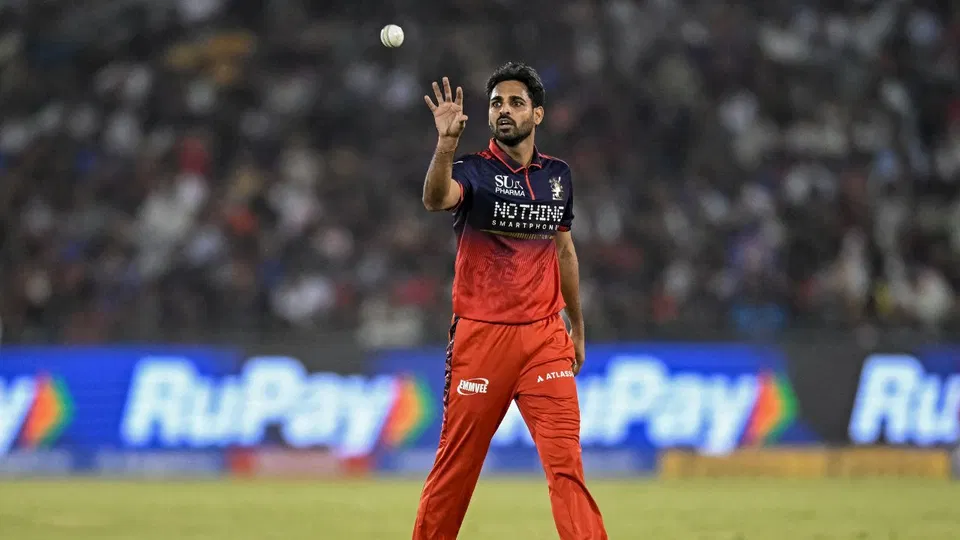
![Ayush Badoni and Washington Sundar [Source: AFP]](https://onecricketnews.akamaized.net/parth-editor/oc-dashboard/news-images-prod/1781004008994_AyushBadoniandWashingtonSundar.jpg?type=hq) Ayush Badoni and Washington Sundar [Source: AFP]
Ayush Badoni and Washington Sundar [Source: AFP]