India and New Zealand will begin their five-match T20I series on October 22, with the opening encounter setting the tone for the contests ahead. With both sides possessing aggressive top-order batters and pace options capable of making an impact, the powerplay and death overs could prove crucial in determining the outcome of the first match.
For India, Abhishek Sharma's attacking approach at the top will be an important asset, while New Zealand will look towards Finn Allen for an explosive start. The bowling options will also be hungry for opportunities.
With the first T20I scheduled at Christchurch, both teams will look to make the most of their specialists in the two phases that often shape a T20 contest. Here's a closer look at India's and New Zealand's best powerplay and death-over options ahead of the opening match.
India's Best Powerplay Options
Abhishek Sharma
Criteria
Data
Innings
87
Runs
1,697
Balls
1,013
Outs
46
Average
36.9
Strike Rate
167.5
(Abhishek Sharma stats in powerplay)
Abhishek Sharma has established himself as one of India's most aggressive batting options in the powerplay, combining boundary-hitting ability with an impressive scoring rate.
Across 87 innings, the left-hander has accumulated 1,697 runs at a strike rate of 167.5, giving India the potential to make a flying start against New Zealand.
His numbers in 2026 have been particularly impressive. Abhishek has scored 369 runs in 15 innings at an average of 52.7 and a strike rate of 214.5. He has also struck 29 sixes this year, demonstrating his ability to put bowlers under pressure from the opening overs.
Prince Yadav offers India a bowling option capable of making an impact during the early overs. In eight innings, he has taken three wickets from 60 balls, conceding 86 runs at an economy rate of 8.60.
The early overs are often a balancing act between restricting runs and creating breakthroughs, and Prince could contribute to both objectives.
Against an aggressive New Zealand top order, his role will be to maintain discipline with the ball while looking for opportunities to force mistakes.
India's Best Options in Death Overs
Arshdeep Singh
Criteria
Data
Innings
78
Balls
650
Runs
1,006
Wickets
63
Economy
9.29
Average
16
Strike Rate
10.3
(Arshdeep Singh stats in death overs)
Arshdeep Singh remains one of India's principal wicket-taking options in the closing overs, having claimed 63 wickets across 78 innings. His bowling average of 16.0 and strike rate of 10.3 highlight his ability to dismiss batters even when they are attempting to accelerate the scoring.
The left-arm pacer enjoyed an especially productive 2024, taking 17 wickets at an average of 10.0 and an economy rate of 7.79. He has continued to contribute in 2026, collecting 12 wickets in 21 innings at an average of 19.3.
Against New Zealand's power hitters, Arshdeep's execution under pressure will be important, particularly when India need to prevent a late surge.
Shivam Dube
Criteria
Data
Innings
30
Runs
349
Balls
194
Outs
18
Average
19.4
Strike Rate
179.9
(Shivam Dube batting stats in T20Is)
Shivam Dube brings additional batting firepower to India's closing-overs options, with his ability to clear the boundary making him a useful choice when the team needs quick runs.
Across 30 T20I innings, he has scored 349 runs at a strike rate of 179.9. His performances in 2026 have offered further evidence of his attacking approach.
Dube has accumulated 182 runs from 92 balls in 13 innings at a strike rate of 197.8. His 14 sixes this year also highlight his capacity to turn a steady scoring rate into a rapid finish.
New Zealand's Best Powerplay Options
Finn Allen
Criteria
Data
Innings
61
Runs
1,130
Balls
697
Outs
46
Average
24.6
Strike Rate
162.1
(Finn Allen stats in powerplay)
Finn Allen is one of New Zealand's most aggressive options at the top of the order, with his attacking intent capable of putting opposition bowlers under pressure from the start.
He has scored 1,130 runs across 61 innings at a strike rate of 162.1, giving the visitors a batter who can change the tempo of an innings within a few overs.
His 2026 numbers have been particularly encouraging. Allen has scored 242 runs from 118 balls in nine innings at an average of 48.4 and a strike rate of 205.1. He has also struck 17 sixes during the year, underlining his ability to clear the boundary regularly.
Nathan Smith
Criteria
Data
Innings
2
Balls
24
Runs
29
Wickets
3
Economy
7.25
Average
9.7
Strike Rate
8
(Nathan Smith stats in powerplay)
Nathan Smith has made a promising start to his T20I bowling career, taking three wickets from just 24 balls across two innings. He has conceded 29 runs at an economy rate of 7.25, while his average of 9.7 reflects his early success in dismissing batters.
His figures suggest that he can offer New Zealand a useful wicket-taking option during the powerplay. Smith's best bowling figures in the supplied record stand at 2/14, showing his ability to claim multiple wickets in an innings.
The opening match against India will provide another opportunity for Smith to demonstrate whether he can maintain that early impact against a strong batting lineup.
New Zealand's Best Options in Death Overs
Kyle Jamieson
Criteria
Data
Innings
22
Balls
149
Runs
279
Wickets
10
Economy
11.23
Average
27.9
Strike Rate
14.9
(Kyle Jamieson stats in death overs)
Kyle Jamieson gives New Zealand a tall pace-bowling option for the closing overs, with 10 wickets across 22 innings. He has conceded 279 runs from 149 balls, recording a bowling average of 27.9 and an economy rate of 11.23.
His strongest season in the available figures came in 2025, when he took five wickets in six innings at an average of 18.2 and an economy rate of 9.25.
Jamieson's 2026 numbers have been more challenging, with two wickets in seven innings and an economy rate of 14.10. His challenge will be to find the right lengths and limit boundary-scoring opportunities when the pressure rises in the final overs.
Daryl Mitchell
Criteria
Data
Innings
33
Runs
432
Balls
234
Outs
19
Average
22.7
Strike Rate
184.6
(Daryl Mitchell batting stats in T20Is)
Daryl Mitchell adds another attacking batting option to New Zealand's death-over plans. He has scored 432 runs from 234 balls across 33 T20I innings at a strike rate of 184.6, showing his ability to accelerate when the innings enters its closing phase.
Mitchell has continued to score quickly in 2026, accumulating 59 runs from 32 balls in four innings at a strike rate of 184.4. His overall tally of 35 fours and 21 sixes highlights his ability to find boundaries while maintaining a brisk scoring rate.
His recent numbers also show that he can contribute without relying entirely on six-hitting, using a combination of boundaries and aggressive running to keep the scoreboard moving.
With a career strike rate of 184.6 in the supplied record, Mitchell offers New Zealand a batter capable of adding momentum late in the innings.
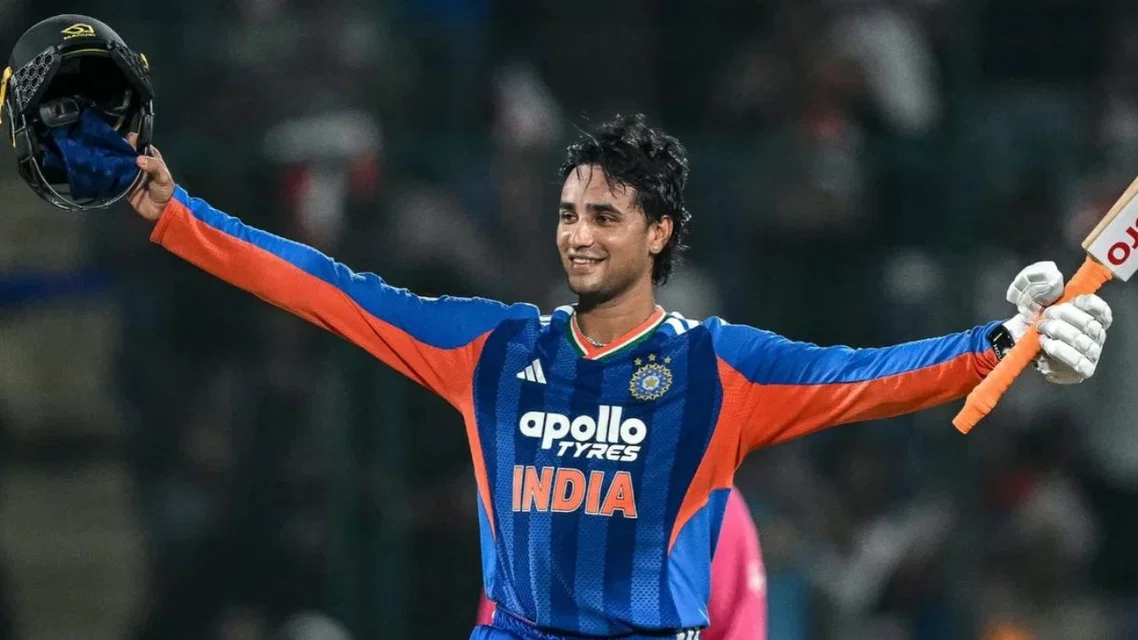 Abhishek Sharma in the India jersey [Source: AFP]