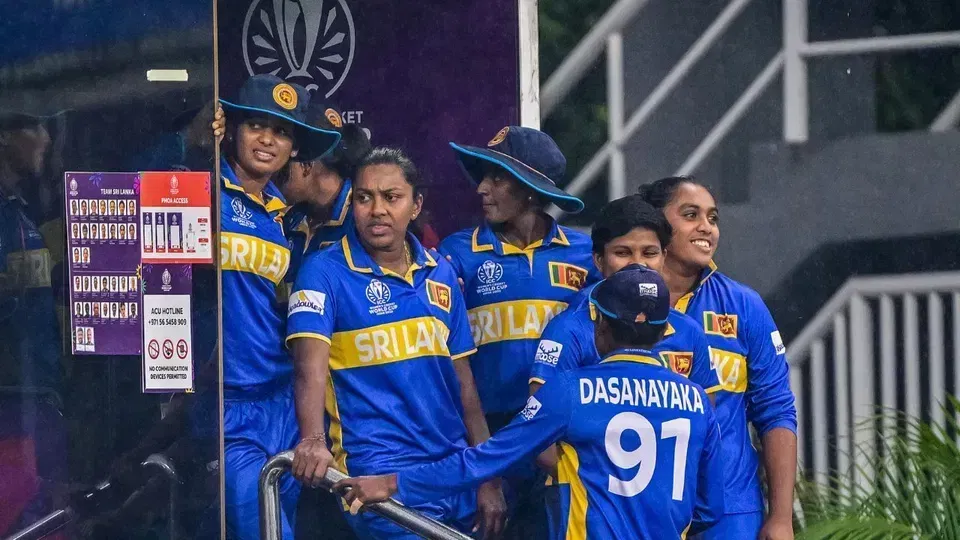
Multiple factors will come into play in Galle. Image Credits: AFPThe venue for the first Test between Sri Lanka and India, Galle, will bring several tactical factors into play. Much of the focus has understandably been on spin bowling, which has done the heavy lifting here in recent years.However, pacers are likely to have a say at some stage of the game, particularly with reverse swing potentially coming into play. For the batters, the challenge will be to adapt to the conditions and score proactively rather than allow the spinners to dictate terms.Spin dominationPacers dominate in the first innings, while spinners dominate in the remaining inningsSpinners are likely to dominate proceedings in Galle. Since 2023, slow bowlers have delivered 76.39% of the balls at the venue and accounted for 75.43% of the wickets, averaging 38.34. Pacers have also maintained a respectable average of 38.45, but have largely remained a secondary option.Among the spin varieties, left-arm orthodox has been the most effective. They have bowled 36.22% of the deliveries and accounted for 38.36% of the wickets, taking 89 wickets at an average of 33.55. Off-spinners come next, with 78 wickets at 39.60 across 34.37% of deliveries.Also Read: What Could Tempt Gill-Gambhir To Hand Debut Cap To Saransh Jain As Manav Suthar Watches On?Notably, left-arm spinners have been highly effective against right-handers in Galle, averaging 28.65, but have struggled considerably against left-handers, averaging 50.45. Off-spinners, meanwhile, have fared better against left-handers, averaging 35.91 compared to 42.45 against right-handers.That could strengthen the case for India to consider Saransh Jain ahead of Manav Suthar as the third spinner. An off-spin option would add variety to the attack, while Jain's slower pace through the air could help him extract turn from the surface even from the first day.Galle has traditionally offered the kind of subcontinental conditions where pacers can make an impact early before spin takes over as the game progresses. In the first innings, fast bowlers have averaged 34.76, considerably better than spinners, who have averaged 71.13. From the second innings onwards, though, the balance shifts decisively in favour of spin, with spinners averaging better than pacers in each of the remaining innings.The shift is also reflected in the workload and wicket share. In the second, third and fourth innings, spinners bowl significantly more overs and account for more than 80% of the wickets. Pacers can still make an impact, particularly in the third innings, but it is the spinners who tend to do the heavy lifting as the Test progresses.Wickets with first new ball and reverse swing with a semi-old ballPacers will get some reverse swing with the old ballPacers have been most effective in the first 10 overs in Galle. In this phase, they have taken 30.91% of their total wickets at an average of 32.18. Their influence diminishes slightly after the early burst as spinners are brought into the attack from both ends.Slow bowlers have been most effective between overs 11 and 30, taking around 25.42% of their wickets at an average of 33.02. Between overs 11 and 20, spinners account for 88% of the wickets, with that figure rising to 92% between overs 21 and 30. Even beyond this phase, they continue to remain the primary wicket-taking option.That said, pacers can still extract reverse swing once the ball becomes semi-old. It starts to come into play after 30 overs, with around 9.94% of deliveries generating reverse swing between overs 30 and 45. The figure rises to 14.35% between overs 46 and 60 and remains healthy at 13.11% between overs 61 and 75.The Kookaburra ball softens considerably earlier than the SG ball and can also start reversing relatively early. Hence, teams could look to keep a pacer operating from one end, particularly if the surface is abrasive, while rotating their spinners at the other.Shubman Gill and his team have reportedly been preparing for this scenario against Sri Lanka by practising with old balls in the nets. Morne Morkel has also stressed the same point, urging his pacers to bowl with intensity in short spells."It will go soft after 25 or 30 overs, so we have to expect that. In these conditions, it's all about your mindset. If you're a fast bowler, if you're going to bowl the shortest spells, the energy you put in the ball and putting it into good areas - you'll always have opportunity. As the Test match will go on, hopefully there will be a little bit of uneven bounce."India have Gurnoor Brar and Prasidh Krishna, both capable of generating high pace and reverse swing. Mohammed Siraj also possesses those skills and can bowl longer spells when required. Since 2023, he has generated substantial reverse swing on 19.80% of deliveries with the old ball in Asia, which could make him particularly valuable in the middle stages.There is also enough value for pacers once the second new ball comes into play. From the point at which the second new ball is taken and over the next 10 overs, pacers account for 42.86% of the wickets at an average of 25.44. Spinners have a slightly better average of 22.33 in the same phase, but the numbers underline that fast bowlers can still have a significant impact, particularly when they have already extracted some reverse swing earlier in the innings.What is the best time to bat?New ball will be crucial for the bowling teamThe semi-old ball also appears to be the best time to bat. After the initial burst from the new ball, batters get a window to score if they apply themselves before the pitch deteriorates further.Batting averages start rising from around the 15th over and remain fairly high until the 75th. Between overs 16 and 30, batters average 37.80 collectively, before that figure rises to 52.00 in the following 15-over phase. There is a slight dip between overs 46 and 60, with the average falling to 36.47, possibly due to the reverse swing on offer, before surging again to 55.33 between overs 61 and 75.After that, batting becomes increasingly difficult for an extended period before the second new ball loses its shine and offers batters another opportunity. However, most innings are unlikely to reach that stage. Hence, the key window will be to maximise scoring once the first new ball gets old, when the ball starts losing its hardness and gives batters more to work with.It is unsurprising, then, that middle-order batters have been more successful than openers in Galle. Openers have averaged 36.57 and faced around 58.87 balls per dismissal. Meanwhile, middle-order batters from No.3 to 6 have averaged 51.84 and faced around 89.50 balls before every dismissal.Using sweep shotsBatters will need to use the sweep shot extensively against spinFor batters to overcome the challenge of spin, using sweep shots - conventional sweep, reverse sweep and slog sweep - will be imperative in Galle. Since 2023, batters have scored 20.43% of their total runs through sweep shots, despite playing them on only 7.37% of deliveries. They average 47.17 with a strike rate of 159.63 when playing these shots.That makes the sweep a high-reward option when executed with the right technique. With the bounce in Galle potentially varying, the idea should be to smother the ball immediately after it pitches. Sweep shots also allow batters to access the areas square of the wicket more consistently.The key will be to avoid playing too many straight-bat shots from the front foot, where excessive turn can bring the batter into trouble. On the front foot, batters average only 22.98 when playing non-sweep shots, compared to 49.19 when playing sweeps. That should be enough incentive to use the sweep against good-length deliveries.When not sweeping, batters will need to use their feet and get closer to the pitch of the ball to negate the spin. Batters moving in front of the crease or coming down the track score 15.40% of their runs and average 41.34 against spin. In short, they cannot afford to remain rooted to the crease: they must either come forward to fuller deliveries or go deep into the crease against relatively short ones.There is also enough reward for playing from the back foot, but judging the length early will be crucial. Batters cannot afford to go deep against fuller deliveries, as spinners who bowl quicker through the air can beat them for pace and trap them in front. Ultimately, Galle is likely to reward batters who read the length early, use their feet decisively and have the skill to keep the spinners from settling into a rhythm.Also Read: Sarfaraz Khan Or Dhruv Jurel? India Make Final Choice For 1st Test vs SL