




 Image Credits: AFP
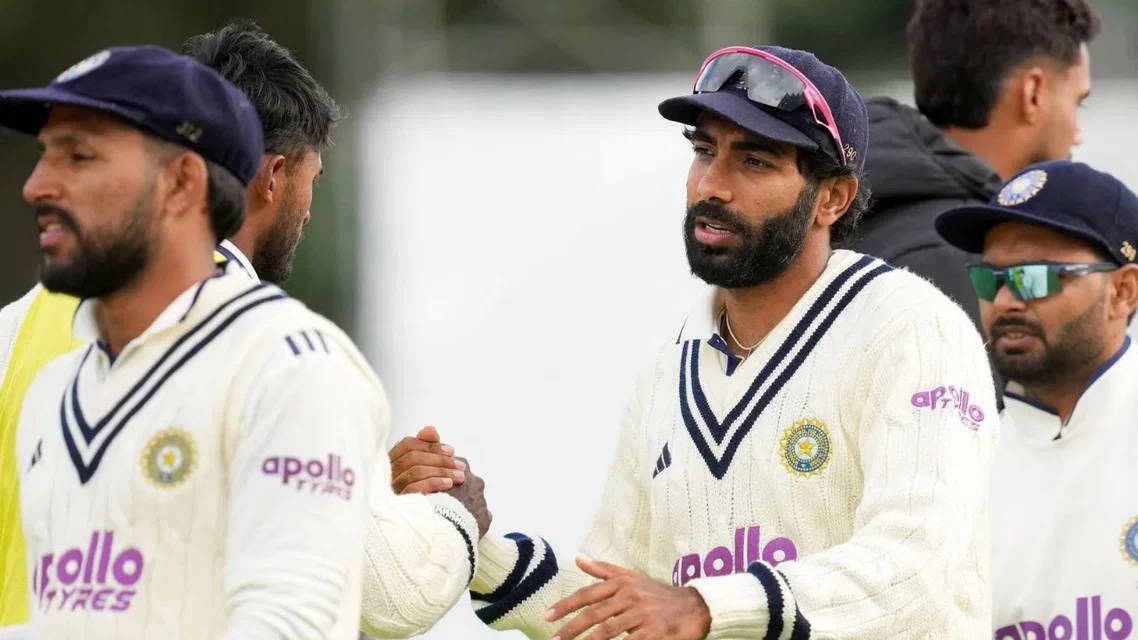
Jasprit Bumrah is enduring the leanest patch of his career. New Zealand have traditionally been his Achilles' heel, but even by the standards of his modest record against them, his current wicketless streak is unusually long. He’s now gone 232 balls without a wicket.
He dismissed Tom Latham on the second delivery of the first Test on Day 4 but hasn't managed another breakthrough since, despite trying different approaches. More importantly, Bumrah has clearly not been at his best in terms of rhythm and zip. He’s down on pace right from the first Test and seems to be running out of gas rather quickly.
What’s wrong with Jasprit Bumrah?
Pinpointing what's troubling Jasprit Bumrah at the moment isn't straightforward. Because even when he’s not at his peak, the ace pacer hasn’t exactly lost his accuracy altogether. For instance, he still hit good length the most on Day 1 in Christchurch, with 55.26% of deliveries between 5 and 7 metres.
There were also a couple of half-chances and appeals in between. But Bumrah was still far from his best, and most of the occasional chances weren’t real wicket-taking opportunities. He induced just 21.93% false shots, the lowest among all pacers.
His false shots aren't translating into wickets as frequently either. Between 2024 and the New Zealand series, Bumrah took a wicket every 12.37 false shots, compared to 16.40 in this series. In Christchurch, his pace was down from the second session onward, even though he bowled a probing spell sandwiched between the second and third sessions.
.jpg)
That leads to greater - and concerning - questions: Why is Bumrah losing his pace so quickly? Is he not fully fit? Or have all those injuries over the years finally started to show their effects?
A major reason Bumrah hasn't taken enough wickets, despite inducing false shots, could be his reduced ability to generate nip and move the ball at pace.
One possible explanation is that Bumrah isn't generating the same momentum and force through his delivery stride and release as he normally does. On occasions when he manages to find that intensity, he seems to struggle to sustain it, tiring relatively quickly.
At one stage during the second session, Bumrah was seen bowling with a different run-up and gather, something he used to employ during his initial years.
He was stuttering a bit more initially and held the ball in his right hand, contrasting with his usual approach of holding it with both hands. Later, Akash Deep confirmed that the pacer was also practising the same in the nets before the game.
.jpg)
A biomechanical expert could better explain the intricacies of this changed run-up and gather. One possibility is that he might be doing it to generate smoother forward momentum through his shoulders and torso.
This could also help him find a better rhythm before bending his back at release, while leaving batters slightly off-guard.
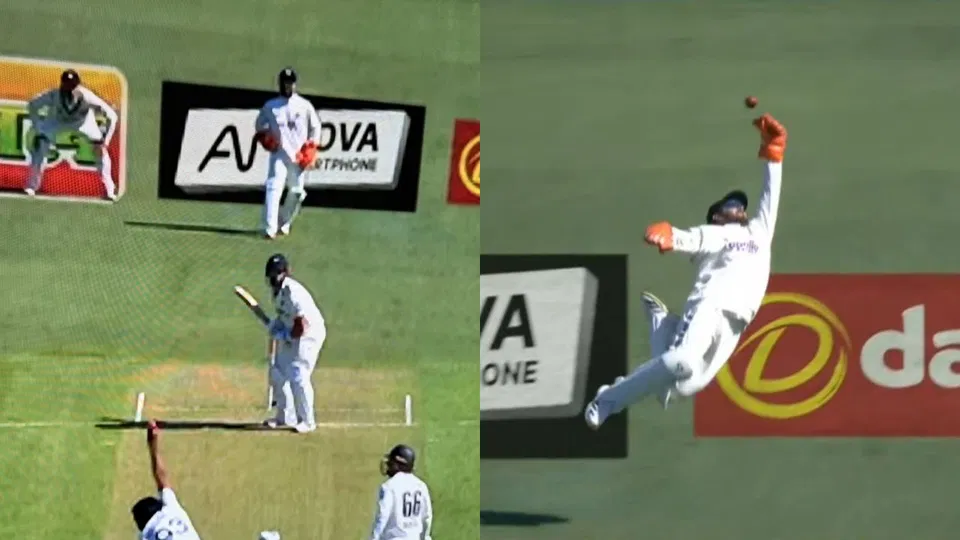
And Bumrah actually looked more threatening once he reverted to his original run-up after experimenting. In his third over post Tea, for instance, he first bowled a nasty short ball to Daryl Mitchell, who was late on his pull and gave a catching opportunity to Rishabh Pant.
Two balls later, he found an inside edge off Tom Blundell’s willow, and the ball somehow escaped the stumps.
This was also his quickest spell of the game and could have resulted in a couple of wickets on another day. So while he’s not been at his best, Bumrah seems to be working on regaining his rhythm. Once he’s in flow, his pace and zip will automatically follow.

His limited preparation could also have contributed to these struggles. Leading up to the Test series, Bumrah hadn’t bowled enough with the red ball, with most of his competitive outings limited to white-ball formats, particularly T20s.
He last played a Test a year ago, and rain cut his sole India A appearance in Lincoln to six overs. It’s hard to come into the series with such a limited build-up, especially on surfaces that become notoriously flat after initial assistance.
Perhaps this is also what the next phase of Jasprit Bumrah's career will look like. He might well have enjoyed the peaks of his career, where he could carry the same sting even after multiple overs and bowl longer spells. He’s more about creating impact in short bursts now.
Given the unusual nature of his action and the stress it places on his back, a phase like this was perhaps inevitable at some point in his career. That he’s managed to play so many games, despite multiple injuries and major back surgery, looked distant at the start of his Test career.
For India, the key will be to keep him as fresh as possible. He might not be able to carry the workload as he did in Australia a couple of years back. But his skills are so good that even a not-so-peak Bumrah is the most potent bowler in world cricket, and he might still bowl several unplayable spells.