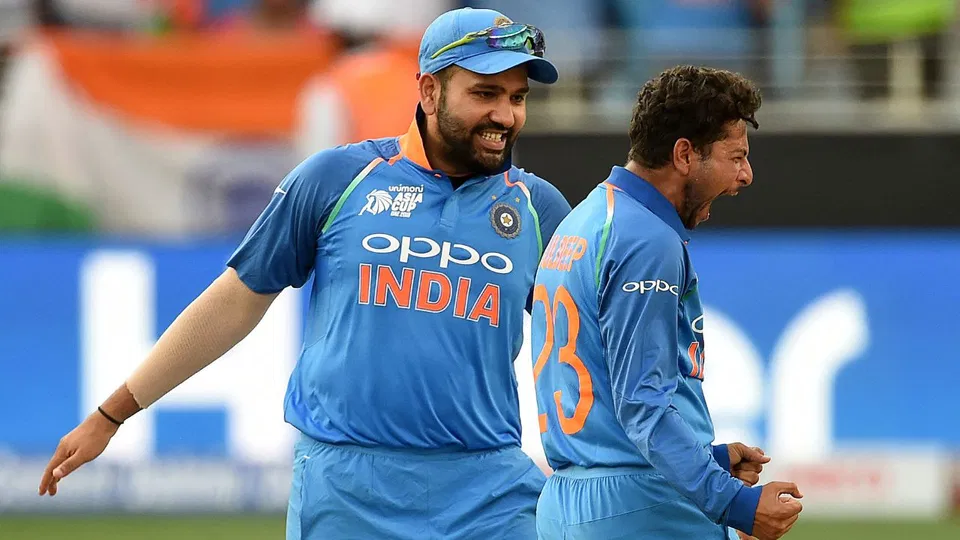
![MS Dhoni, Rohit Sharma and Shubman Gill [Source: AP]](https://onecricketnews.akamaized.net/parth-editor/oc-dashboard/news-images-prod/1784290734000_MSDhoniRohitandGill.jpg?type=hq) MS Dhoni, Rohit Sharma and Shubman Gill [Source: AP]
MS Dhoni, Rohit Sharma and Shubman Gill [Source: AP]
The Indian cricket team once again finds itself at the centre of a major transition debate. Reports have claimed that Rohit Sharma could be playing his final ODI on July 19, with the Ajit Agarkar-led selection committee and head coach Gautam Gambhir reportedly looking beyond the veteran opener for the 2027 ODI World Cup.
If the reports prove true, Shubman Gill will officially take over India's ODI future with Yashasvi Jaiswal expected to partner him at the top. Interestingly, this is not the first time an Indian captain has overseen such a ruthless transition.
Nearly two decades ago, MS Dhoni introduced one of Indian cricket's most controversial selection strategies, the infamous rotation policy. It changed careers, divided opinions, and ironically played a key role in Rohit Sharma's own rise.
When MS Dhoni began India's youth revolution in 2008
The roots of the transition actually date back to the 2008 Commonwealth Bank Series in Australia.
Following India's disappointing ODI performances overseas, Dhoni reportedly pushed for a younger, more athletic side. The selectors dropped stalwarts Sourav Ganguly and Rahul Dravid from the ODI squad despite both remaining active in international cricket. Dhoni later admitted he was clear about the kind of team he wanted.
"I was pretty clear about the players I wanted in the side. That's what I said to the selectors as well. You can see the kind of team I got," Dhoni told ESPNCricinfo after India lifted the CB Series.
The decision attracted heavy criticism at the time, especially because Ganguly and Dravid had just been part of India's historic Test win in Perth. However, Dhoni remained firm that modern ODI cricket demanded better fielding and younger legs.
India went on to defeat Australia in the final to win their first ODI tri-series in Australia in 23 years, allowing Dhoni to justify his bold selection calls.
Also Read- 5 Most Hilarious Rohit Sharma Press Conference Moments
The 2012 rotation policy that divided Indian cricket
Four years later, Dhoni's transition plan became even more controversial. During the 2012 CB Series in Australia, he implemented the infamous rotation policy involving Sachin Tendulkar, Virender Sehwag and Gautam Gambhir. Instead of playing all three senior batters together, Dhoni decided that only two would feature in any given match.
His reasoning was straightforward. According to Dhoni, playing all three veterans together would cost India valuable runs in the field due to declining mobility, while the management also wanted younger players to gain experience before the 2013 Champions Trophy and eventually the 2015 World Cup.
The experiment never settled India's batting combination. India used five different opening pairs in eight matches, while Gambhir was shuffled between opening, the middle order and even left out despite being among the team's better performers.
Eventually, India failed to qualify for the CB Series final, making the policy one of the most debated decisions of MS Dhoni's captaincy.
Rohit Sharma himself became part of Dhoni's transition plan
One of the biggest beneficiaries of the rotation policy was Rohit Sharma. Rohit was attempting to cement his place in India's ODI side, but every opportunity came with added pressure because it effectively meant one of Tendulkar, Sehwag or Gambhir had to sit out.
Even at the time, reports suggested Rohit felt uncomfortable being viewed as the reason behind the rotation. While Suresh Raina continued to enjoy the backing of the team management despite inconsistent form, Rohit found himself under constant scrutiny despite averaging around 74 in his previous 13 ODIs.
Dhoni himself acknowledged the difficult situation. "If you want to make Rohit play, an experienced player can come and go out of the side. But for Rohit it may be tough later," Dhoni had remarked during the tournament.
Although Rohit Sharma eventually established himself as India's premier ODI opener after being promoted permanently in 2013, his early years were closely linked to Dhoni's aggressive transition strategy.
History repeats as Rohit faces another transition
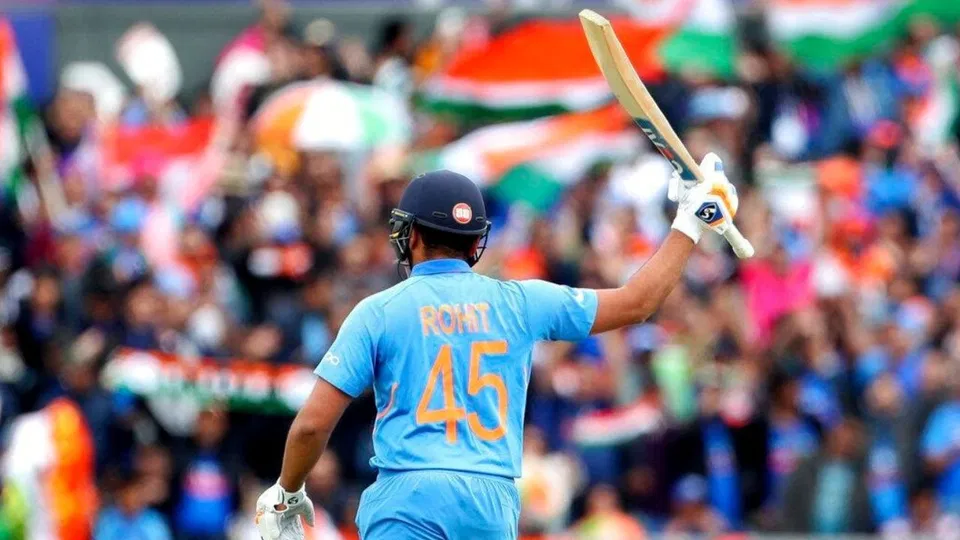
Fast forward to 2026, and Rohit Sharma finds himself on the opposite side of a transition. According to recent reports, the selectors and head coach Gautam Gambhir are planning for the 2027 ODI World Cup with younger opening options, particularly Yashasvi Jaiswal alongside Shubman Gill. Rohit's recent ODI form has also come under scrutiny.
While no official retirement announcement has been made, reports suggest the third ODI against England on July 19 could potentially become Rohit's final appearance in the format.
Ironically, the player who once fought for opportunities during MS Dhoni's controversial rotation era may now be experiencing a similar transition himself.
Also Read- Rohit Sharma Retirement: Mohammed Shami-Like Status Given By Selectors
.jpg?type=mq "India's Major Problem Batting 1st")