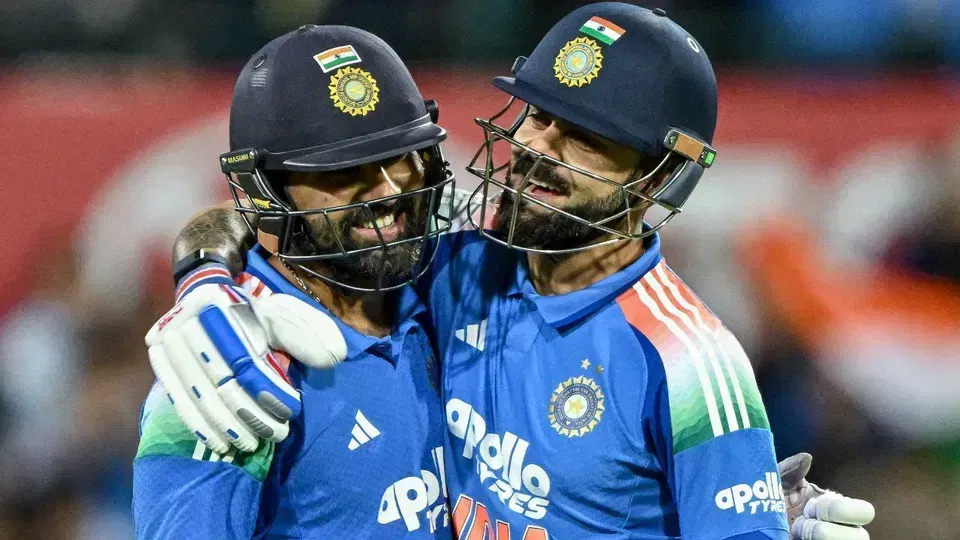
The scorecard and the India team [Source: @BCCI/X]In amusing manner, the Asian Games 2026 semi-final between India and Sri Lanka saw a massive mishap from the point of view of Indian fans. While displaying the Indian cricket team's scorecard, the official broadcaster of the Asian Games, Sony Liv, made two major changes that grabbed eyeballs.For the unaware, India won the second semi-final by a massive margin of 124 runs after setting a target of 170 for Sri Lanka. However, the win has now been overshadowed by the player name alterations made by the broadcasters and the association.Broadcasters show surprising India player names on the scorecardAfter India's innings ended, during which Ishan Kishan produced a breathtaking 46-ball 80 and Vaibhav Sooryavanshi scored 38 runs, two uncommon and unheard names appeared on the scorecard. 'T.T.V Namboori' and 'W.S. Mani Sundar' were displayed on the scorecard instead of names Washington Sundar and Tilak Varma.The scorecard was quickly highlighted, and the picture went viral on the internet, with Sony Liv facing criticism. However, in reality, the names were actually representing abbreviated versions of the cricketers' full names. The Khel India @TheKhelIndia Very unique name format at Asian Games! Guess who is S. Vishwanadh & T.T.V Namboori? 🙂 Oct 1, 2026, 10:13 AM The 'W.S' in Sundar's name represented Washington Sundar while Mani Sundar is the cricketer's father. Meanwhile, the full name of Tilak Varma stands to be Namboori Thakur Tilak Varma, hence justifying the 'T.T.V Namboori' name tag.Also Read- BCCI To Maintain Its Stance On India vs Pakistan Handshake Row In Asian Games Final: ReportBefore India’s innings ended, another instance was pointed out by the internet, where Sanju Samson’s name on the scorecard was replaced by ‘S. Vishwanadh’. Notably, Viswanath is also the actual middle name of the Trivandrum born Sanju Samson.Why Asian Games display full player names?For the unaware, the use of full player names on Asian Games scorecards is not a broadcasting blunder but a result of standardised athlete registration procedures followed at major multi-sport events.The Olympic Council of Asia (OCA) and the International Olympic Committee (IOC) follow official naming policies, under which athlete details are generally recorded using their legally registered names as provided during accreditation, often based on passport information. These details are then entered into centralised databases used for event operations and broadcasting.Unlike bilateral cricket series, where players are commonly identified by their familiar names or sporting identities, multi-sport events require a consistent naming system across several disciplines. This helps maintain uniformity in television graphics, digital scoreboards and official reports.Also Read- Mohammad Rizwan Vows To Co-Operate In NCCIA Investigation