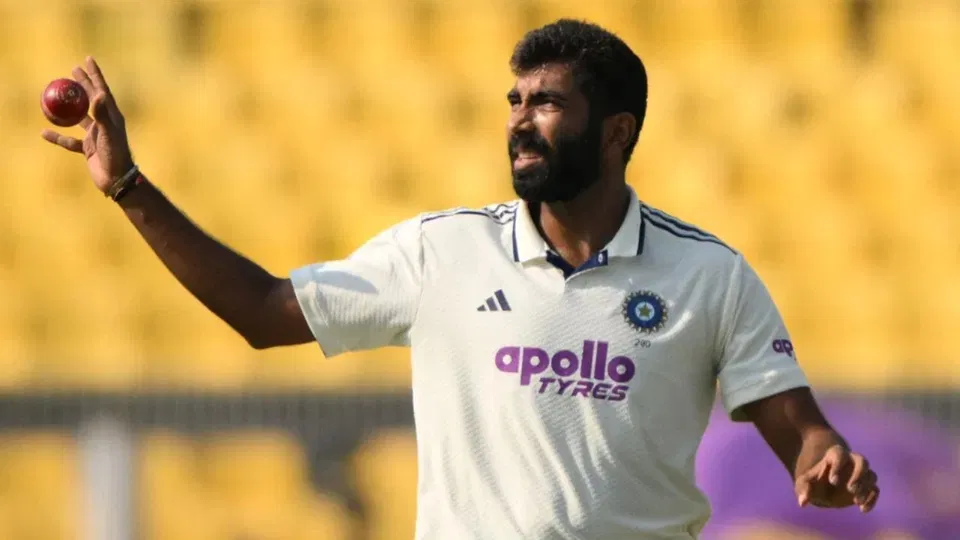
Jasprit Bumrah replaced by BCCI in IND Test squad vs SL [Source: AFP]In a recent development, the reason behind Jasprit Bumrah's India vs Sri Lanka Test series snub has now been explained. The premier fast bowler was ruled out due to a lingering left knee issue, with fresh reports now suggesting that the BCCI medical team itself advised the India quick against making a hurried return, fearing that it could lead to a relapse for the bowler. As per Cricinfo, the medical staff recommended extra recovery time for Bumrah, who has been nursing the knee problem since the T20 World Cup earlier this year. Hence, it can be understood that the board is currently prioritising Jasprit Bumrah's long-term fitness over a short-term return, especially for the India versus Sri Lanka series.Why did the BCCI stop Jasprit Bumrah from returning?Bumrah has not played competitively since India's second ODI match against England in Cardiff on July 16. During that match, the pacer sustained an impact injury to his left knee while fielding. Although he finished the match, the discomfort wore on him, which eventually ruled him out of the series decider at Lord's. Now, the latest reports from the BCCI's medical team share that the injury was not a short-term concern but a long-term problem for the India star. Immediately after the England series concluded, Bumrah reportedly received an injection in his left knee as part of a rehabilitation plan prepared by the medical staff. Also Read- India's Best Bowling Attack Without Jasprit Bumrah For Sri Lanka TestsThe medical team aimed to reduce Bumrah's inflammation in his knee while ensuring the workload on the injury remained under control. Later, Bumrah also reported to the CoE in Bengaluru, where he underwent a fresh round of fitness assessments. Following those tests, the medical team reportedly concluded that allowing Jasprit Bumrah to resume bowling immediately could aggravate the issue and potentially keep him out of action for a much longer period. As a result, the BCCI decided against risking the premier pacer for the two-match Test series, despite his importance to India's bowling attack. As Bumrah was ruled out, Auqib Nabi joined the India Test squad as his replacement. The injury dates back to the T20 World Cup 2026While the impact suffered during the England ODI brought the issue into the spotlight, Bumrah has been managing discomfort in the same left knee since the T20 World Cup earlier this year. The setback in Cardiff only aggravated the condition, which prompted the board to adopt a cautious approach. Instead of rushing him back into international cricket, the medical team ensured that the injury would heal completely before he resumed bowling. Now, India are set to play a packed international calendar over the next 18 months, with preparations for the 2027 ODI World Cup as well, and hence the board is unwilling to compromise the long-term availability of the pacer.Why the BCCI's fear is completely justifiedWhile the board's fear is completely justified, the caution surrounding Jasprit Bumrah's comeback is not something that came automatically. India has earlier paid a heavy price for bringing the speed star back before he had fully recovered. Back in 2022, Bumrah missed the Asia Cup because of a back injury but returned for the home T20I series against Australia. He featured in the second and third T20Is before the back pain resurfaced ahead of the South Africa series. This eventually forced him out of the 2022 T20 World Cup and sidelined him from the game for almost 11 months. Jasprit Bumrah only returned in August 2023 after undergoing extensive rehabilitation and recovery. With that experience still fresh in the memory, the BCCI's latest decision appears to be driven by lessons learned rather than reacting in panic.Also Read- Indian Team Management Fixes 2 More Casualties For BCCI Amid Frequent Injury Setbacks