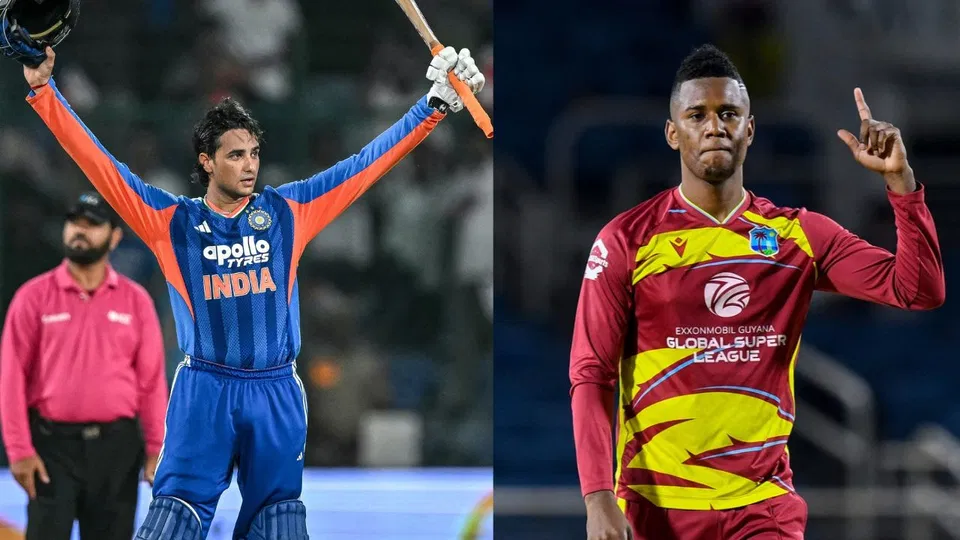
Tilak Varma has done really well in the lower middle order. Image Credits: APTilak Varma has his limitations as a batter. Those limitations have also caused multiple issues recently. His spin game, for instance, is still far from developed and has stifled him even on batting-friendly pitches.But Tilak has somehow found ways to be effective despite obvious issues. He has recently been given a new role in the middle and lower-middle order, and his superior pace game helped him fit in. It also shielded him a bit from spin since he now faces more pace in T20Is.Tilak Varma’s new T20I roleTilak Varma by batting position in T20Is since the Ireland seriesSince the UK tour in June, Tilak Varma has batted 16 times for India in T20Is. 15 of them have come at No.5 or below, where he has scored 327 runs at an average of 46.71 and a strike rate of 145.33. This includes four fifties.At No.5, the southpaw has 236 runs at an average of 59 and a strike rate of 139.64 across 10 outings, with three half-centuries. At No.6, he has played four times, averaging 44.50 and striking at 171.15. The other remaining knock came at No.7 against Sri Lanka in the Asian Games 2026 semifinal.During this period, Tilak has faced various conditions and bowling attacks, but he has found ways to step up in tricky situations. Take his knock against Ireland in the second T20I, for instance. After India lost too many early wickets, he had to rebuild from No.5 on a sluggish deck, where the ball didn’t come nicely, and square boundaries were significantly bigger.Tilak formed useful stands with Axar Patel and Shivam Dube and went on to hit a solid fifty when few other batters could get going. Unfortunately, he couldn’t take his team over the line, but this knock again depicted his ability to step up in precarious situations.Sony Sports Network @SonySportsNetwk STRAIGHT INTO THE PARKING LOT! 🚀 Tilak Varma muscles one all the way for six 💪 Watch Pakistan vs India in the 20th Asian Games Gold Medal Match, LIVE NOW on Sony Sports Network TV channels & Sony LIV. #SonySportsNetwork #SonyLIV #AsianGames #AichiNagoya2026 Oct 3, 2026, 12:17 PM And then, he played a completely contrasting knock against England in Southampton. India wanted him to play briskly and keep the momentum going in a tall run chase against a quality English pace attack. Tilak did precisely that and kept hitting even after Ishan Kishan departed.In the Asian Games 2026 final, Tilak Varma played one of his finest T20 knocks on a slow, turning pitch. At No.5, he arrived at the crease as Pakistan began a mini comeback after Abhishek Sharma’s meticulous assault at the top. From there, he picked up again in the final five overs and finished strongly, propelling India to 211/6 in the first innings.What helps Tilak succeed in the lower middle orderTilak Varma's numbers by lengths against pace since the Ireland seriesOne of the biggest reasons for Tilak Varma’s success in T20Is is his superior game against pace. He has a stable base, a wide range of shots and immense power against fast bowlers, allowing him to score freely from the outset. He is among the best pace players in the T20I setup.Since the UK tour, Tilak has struck at 166.12 against pace, hitting a boundary every 5.04 deliveries. In his lower-middle-order role, being proactive is important, especially when pace dominates the attack. That is also where one of his biggest strengths lies.Tilak is one of the Indian batters who can hit hard and short balls with authority, making him particularly hard to cramp with pace. Since the UK tour, he has struck at 180 against back-of-a-length deliveries from fast bowlers, finding a boundary every 4.38 balls. His strike rate against short balls in the same period stands at 140.That strength was especially valuable during the England series, when almost every Indian batter struggled against a pacy English attack on quick, bouncy pitches. India’s top seven, excluding Tilak, collectively averaged 17.14 and struck at 142.80 against pace. Tilak, meanwhile, averaged 23 and struck at 186.49.Sony Sports Network @SonySportsNetwk PICKED. PUMMELED. GONE. ☄️ Tilak Varma latches onto the pace and dispatches it with ease 🚀 Watch #ENGvIND LIVE NOW on Sony Sports Network TV channels. #SonySportsNetwork #MamlaPersonalHai #ExtraaaInnings Jul 9, 2026, 11:40 PM His range against pace extends well beyond conventional strokes. Tilak is comfortable accessing the areas behind square, using unorthodox shots to find gaps and cover almost every part of the ground. He has struck at 190 on pull and hook shots since the UK tour, hitting a boundary every five balls. He has also used the scoop and late cut effectively, allowing him to play behind the wicket and make the bowler’s pace work against him.The second T20I against Zimbabwe offered a perfect example. Blessing Muzarabani began the 14th over with a short-ball plan. His second delivery was back of a length outside off, climbing sharply on Tilak. Rather than forcing the shot, Tilak waited and guided it into the gap between backward point and third man for four.He then walked across his stumps and scooped the next ball to the left of the wicketkeeper for another boundary. Muzarabani went shorter again on the next delivery, but Tilak produced the same response, piercing the gap between backward point and third man for three consecutive fours.The Harare surface was hardly ideal for strokeplay, while Muzarabani’s high-arm release generated plenty of bounce. Yet Tilak somehow rode the pace and bounce, using his range and power to manufacture scoring opportunities when conventional strokeplay was difficult.That is what makes him so difficult to contain with pace. Irrespective of the pitch, Tilak can play behind square, absorb extra pace and generate power on his own terms.Why Tilak Varma remains necessary in new roleEngland showed just how vulnerable India’s batting unit can be against raw pace and high bounce. Some of those issues were visible again in Ireland and Zimbabwe. The broader trend remains clear: several batters in the current setup can be troubled when the pace is high, and the lengths are into the pitch.Also Read: Tilak Varma Equals Virat Kohli, Abhishek Sharma For Most 50-Plus Scores In T20I FinalsShreyas Iyer hasn’t been at his fluent best against pace, while Shivam Dube gets restricted by shorter deliveries on wider lines. In a full-strength XI, Hardik Pandya and Axar Patel are also likely to feature, and both have shown signs of regression against fast bowling. That makes Tilak Varma one of India’s better options to handle pace through the middle and lower-middle order.India need a couple of genuine pace-hitters in the XI, but they haven’t shown much willingness to move in that direction. Rinku Singh and Naman Dhir need an extended run at No.6 or below to fill that role. By the 2028 T20 World Cup, India will need a deeper pool of batters capable of taking on hard lengths on bouncy pitches in Australia.That makes Tilak even more important. He may have to shield several batters around him from a weakness opposition teams are increasingly targeting. There are not many Indian batters who can do what he does against pace, and recent overseas outings have cleared it further.His move into the lower middle order, therefore, could not have come at a better time. This should be a role Tilak holds for at least the next couple of years.Also Read: India Predicted Playing XI vs West Indies- 1st T20I, 2026: Will Vaibhav Sooryavanshi Play?




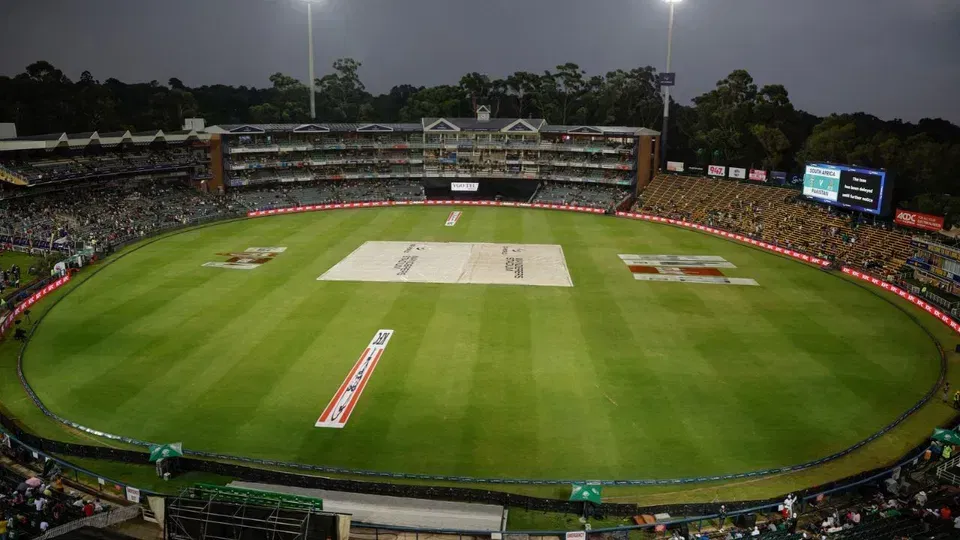
.jpg?type=mq "West Indies' T20I Record At Ekana Stadium Lucknow Before 1st Match vs India, 2026")