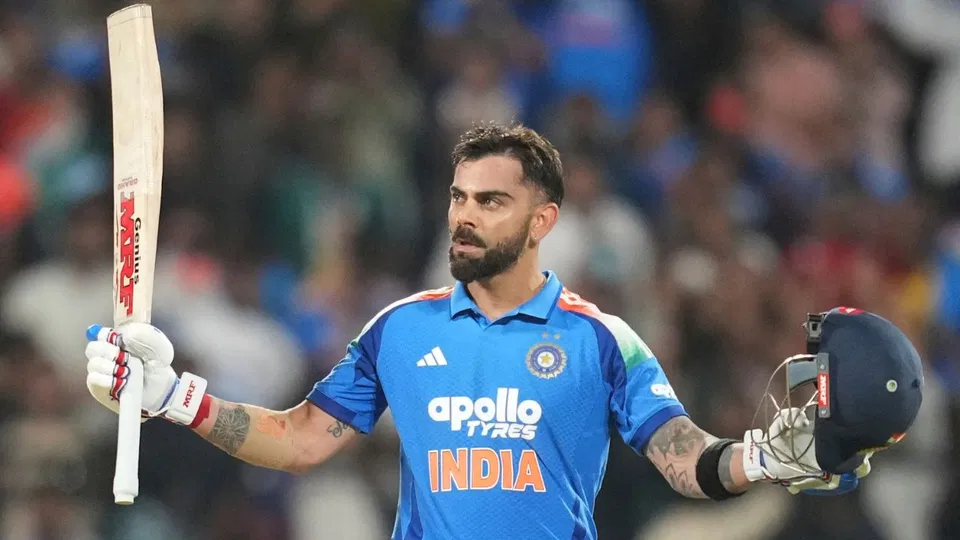
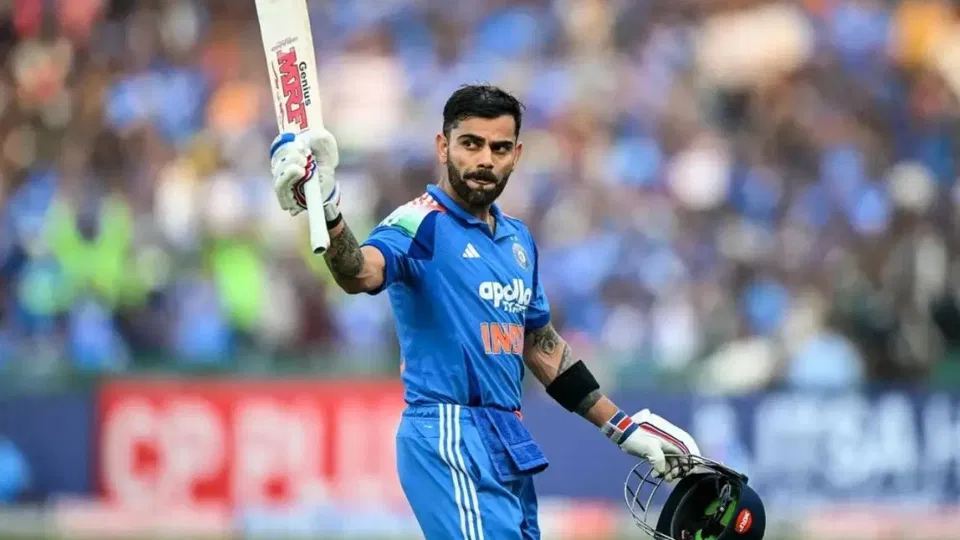
Shubman Gill and Virat Kohli have been magical as a pair. Image Credits: AFP“Difficult man to contain.” Ravi Shastri had barely finished praising Virat Kohli’s maximum when Shubman Gill stepped out two deliveries later and hit one down the ground for another boundary in Thiruvananthapuram last night. “To watch these two bat together is an absolute treat,” quipped Ian Bishop immediately.Skill-wise, Gill and Kohli are two of the finest ODI batters in world cricket today. And when they bat together, there’s a certain panache and authority that few other batting pairs can match. It’s as if there’s so much class on display that you barely find the words to admire one thing before the next moment gives you something even better to marvel at.The genius of Shubman Gill and Virat Kohli as a pairShubman Gill and Virat Kohli as a pair since 2024Shubman Gill and Virat Kohli have together accumulated 1241 runs at an average of 51.70 across 25 ODI innings. They have three 50-plus and five century stands together. More importantly, they have maintained a run rate of 6.15.That’s an impressive achievement on multiple fronts. As good as the decks have been, they are top-order batters who bat deep into the innings and build long knocks. To do that at such a high rate over a sustained period, against different bowling attacks, makes it even more remarkable.Also Read: "We Hardly Talk..": Virat Kohli-Shubman Gill Banter ContinuesAnd neither does the heavy lifting on their own. Usually, when a top-order pair scores as quickly as this one does, one batter takes on extra risk to keep the momentum going while the other manoeuvres the field and rotates the strike. That’s what Rohit Sharma, for instance, used to do a couple of years back while opening with Gill.But in this case, the two complement each other shot for shot, milestone for milestone. In the first ODI against West Indies, Roston Chase dragged one short, and Gill transferred his weight and pulled ferociously over square leg for four. Off the same bowler and from around the very same length, Kohli also transferred his weight onto the back foot and pulled, but imparted a little more power to send it a touch straighter over deep midwicket for six.BCCI @BCCI 5⃣0⃣ up with a 6⃣ 👌 1⃣0⃣0⃣ up with a 6⃣ 💪 Virat Kohli meant business tonight 🔥 Updates ▶️ Sep 27, 2026, 9:32 PM He repeated the same shot off the same bowler an over and a half later. Similarly, when Kohli started with two boundaries off Alzarri Joseph, Gill later replicated the feat against Matthew Forde in his second spell. Kohli, unsurprisingly, went a step further, hitting three fours in the same set four overs later.It was fitting, then, that Kohli completed his 15000 ODI runs with Gill at the other end. Only for Gill to notch up his 10th ODI century eight balls later.The control Gill and Kohli bringFalse shot% of Shubman Gill and Virat Kohli since 2024ODI cricket is all about maintaining control for extended periods. Virat Kohli has done it throughout his career. Shubman Gill is following in the same footsteps.Part of the reason the two have scored at such a consistent rate without compromising their scoring speed is their superior control. Since 2024, Gill’s control of 81.98% has been the best among all batters to have faced at least 500 balls in ODIs. Kohli stands 12th with 77.72%, despite taking risks and maintaining a strike rate as high as he has in recent times.More importantly, the two have set a standard that is difficult to crack when batting together. Among all pairs to have faced at least 500 balls in this period, Gill and Kohli have played the lowest percentage of false shots (17.47%), while their average (55.50) is the third-highest. All this while maintaining a strike rate of 95.03 and a balls-per-boundary ratio of 8.59.Most batting pairs tend to trade off one aspect or another. For instance, Mitchell Marsh and Travis Head score at a phenomenal rate but take considerably more risks in doing so. Harry Brook and Joe Root offer greater control but compromise on their average. Meanwhile, Daryl Mitchell and Glenn Phillips share an excellent average and strike rate but also a higher false-shot percentage.Notably, the Indian pair is also in greater control when batting together. Gill’s false-shot percentage drops from 19.04% with other partners to 14.49% alongside Kohli. Kohli’s, meanwhile, falls from 22.96% to 20.27%.BCCI @BCCI That feeling when you bring up ODI century No. 10 🤌💙 Captain @ShubmanGill taking a well-earned moment to soak in the applause 👏 Updates ▶️ Sep 27, 2026, 8:51 PM In Vadodara earlier this year, Gill was scratchy to begin with against New Zealand in the powerplay. He was not getting his timing and played plenty of dot balls as the Kiwi pacers bowled tight lines. Rohit Sharma also got out while looking to up the tempo in the ninth over.But as soon as Kohli arrived at No.3, he started motoring along, and that soon rubbed off on Gill. From 10 off 23 deliveries at a strike rate of just 43.48, with a solitary boundary, the Indian captain scored his next 46 runs at 95.83, with four glorious boundaries, to put on a 118-run stand with Kohli for the second wicket.When these two bat in ODIs, the innings seems to run on autopilot. They know when to rotate the strike and how to find those occasional boundaries in between, keeping the momentum going without having to force anything. That comes from their superior control, which itself is a byproduct of the sheer skills they possess.There are no fixed roles, no designated aggressor or accumulator. It’s just sublime batsmanship at both ends from two of the finest batters in world cricket. And perhaps that is what makes this partnership so compelling.Also Read: Dissecting The Madness Behind Virat Kohli's New ODI Approach