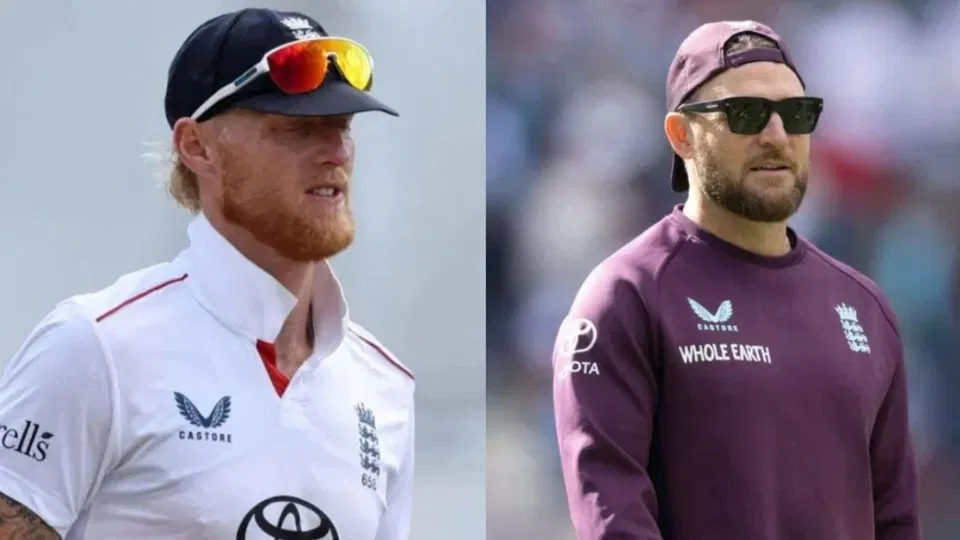
Ben Stokes led England aggressively in Tests. Image Credits: AFPWhen Ben Stokes took over as Test captain, England were in tatters as a unit. They had just endured a rough Ashes tour Down Under, and things needed an immediate revamp in the longest format.The traditional method was no longer working for them, with most batters failing to apply themselves for longer at the crease. Hence, when Stokes came to the helm, he changed how they approached the format.How Ben Stokes worked around England’s batting flawsUndoubtedly, England have lately not produced enough Test-level batters in the domestic circuit, which was Ben Stokes’ biggest challenge. He had to work around ways to score runs with shaky techniques, which was only possible by batting aggressively.Also Read: England’s Ashes Winning Captain Questions Ben Stokes' Retirement TimingHence, England started picking batters who, while not compact, batted with an aggressive intent and played their shots, irrespective of the match situation. Under Stokes, England had the best run rate (4.44) and average (34.51) among all Test-playing nations.Australia were a distant second, with a run rate of 3.66 during this period. Interestingly, England also maintained the same approach away from home, with a run rate of 4.42 in away Tests being the highest among all nations.England were quickest and still maintained a healthy recordSure, this approach was reckless at times, but England never succeeded with the traditional approach either. Frankly, they didn’t have enough skilled batters to succeed without hitting back with aggressive intent.Between 2020 and the start of Stokes’ tenure, England collectively scored just 3.09 runs per over but still averaged a mere 28.69. Away from home, the English side had a run rate of 3.08 and an average of 26.56.These numbers suggest that England were not achieving anything by traditional means. The batting was tricky across countries, and their limited talent pool meant they had to do something different to sustain themselves.Aggressive batters with a high strike rateEvery team has a few rapid scoring batters, but England drafted more and more batters with an ultra-aggressive approach and a high strike rate. Under Ben Stokes’ captaincy, England had six of the 10 quickest-scoring batters in their side, including three at the top, with a minimum of 25 innings and 500 runs.Ben Duckett (88.13) was the quickest, followed by Jonny Bairstow (87.82) and Harry Brook (86.82) in Tests. Jamie Smith (73.73) and Zak Crawley (72.32) were seventh and eighth quickest, followed by Ollie Pope (71.92) in the ninth spot.These aggressive batters helped them play a brand of cricket that not only hid their flaws but also made them formidable at home. They could post big scores consistently or chase down big targets in the fourth innings.England played an aggresive brand of cricketDuring Stokes’ tenure, England posted three 650+ scores in an innings and had six successful run chases of 250+ in the final innings, the most among all teams. This included three chases of 350+ and one of 299.They would go after any chase and would never back down, even if that meant defeat. That meant they consistently played more bowlers who could bat a bit, such as Brydon Carse and Gus Atkinson.England’s record under StokesEngland indeed were reckless and showed poor game awareness at times, but that’s how they fetched results most of the time. After Ben Stokes became a full-time captain, England won 24 of 43 matches, with a win-loss ratio of 1.411.They lost 17 matches, and two ended in a draw. The English team were more dominant at home, winning 16 out of 23 matches at an impressive win-loss ratio of 3.20, losing only five matches across four years.Away from home, England did reasonably well with eight victories in 20 attempts, but lost 12. Most of those defeats came in India and Australia, where they lost four matches each.These two nations remained their biggest hurdle under Stokes’ regime. But then, they were not winning under these conditions before either.At least, England conquered Pakistan and New Zealand in this era. Between 2020 and before Stokes joined as a full-time captain, England could win only 10 of the 29 matches and lost 12 of them.England Cricket @englandcricket Twenty-seven seconds after the crowd were told... Ben Stokes does this 🤯 Jun 29, 2026, 2:11 AM Even at home, they could win only four out of 12 matches, three of which came against the West Indies and Pakistan. Outside home conditions, England clinched victory in only 35.29% of matches at a win-loss ratio of 0.75.So, Ben Stokes’ side still did reasonably well, even if they didn’t change the game, which they claimed time and again. On the individual level, England definitely improved under him, even if those big assignments were missing.Stokes was a captain who knew how to maximise the limitations and give themselves the best chance to win. His methods were absurd at times, but England needed a touch of absurdity to pull themselves out of the rut in the longest format.Also Read: Ben Stokes Kept Brendon McCullum In The Dark Over His International Retirement





.jpg?type=mq "Phil Salt Is Chasing Rohit Sharma: Records That England Players Can Break In India T20Is")