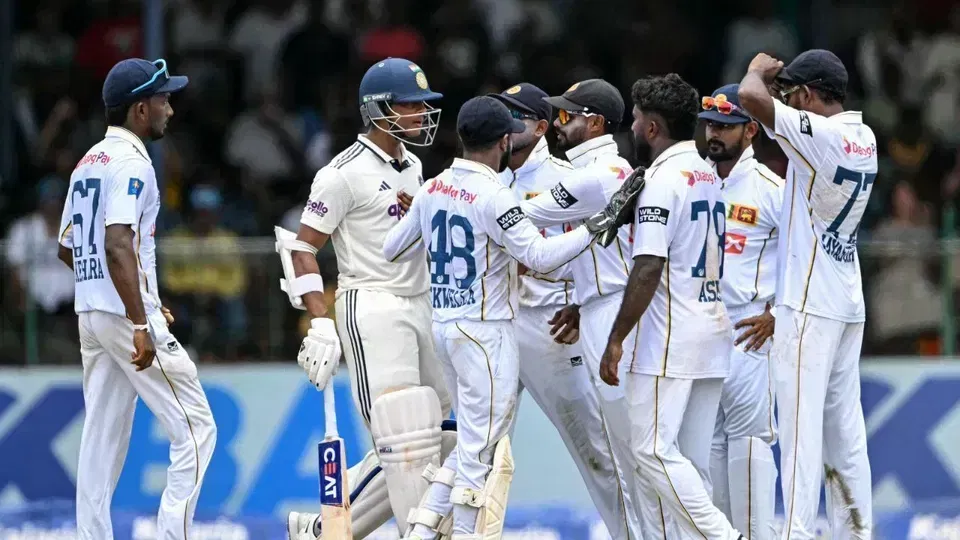
Devdutt Padikkal and Shubman Gill put on a masterclass vs spin in Colombo. Image Credits: AFPIt was only the 35th over when Sri Lanka’s lead spinners, Prabath Jayasuriya and Keshara Nuwantha, began bowling negative lines. In a sense, they were forced into it this early in the Test. The spinners had little to no assistance in Colombo, and Devdutt Padikkal and Shubman Gill ensured they had virtually nothing to work with once the early movement for the pacers faded.Both batters have contrasting methods against spin, but both are effective in their own ways. In Sri Lanka, spinners often need to bowl slightly fuller than they would elsewhere. The ideal good length is not necessarily between four and six metres here. It comes down to three to five metres because the conditions encourage spinners to impart more overspin, and the added revolutions can come at the cost of speed through the air.Devdutt Padikkal and Shubman Gill with different methodsFoot movement vs spin on lengths between 3 and 5 metresDevdutt Padikkal can be a particularly confusing batter for spinners. His height and long reach help him get to the pitch of the ball easily. Yet, somewhat paradoxically, he is even more effective when he stays back.Padikkal is comfortable staying back to anything even remotely short, allowing him to milk the spinners while encouraging them to believe fuller lengths might work against him. At the same time, he plays as late as possible and remains willing to come forward or use his feet when they do overpitch.Also Read: India Coach Breaks Silence On Yashasvi Jaiswal–Asitha Fernando FightOn lengths between three and five metres, Padikkal played around 33.64% of deliveries from the back foot or while backing away against spin in Colombo. He scored at a strike rate of 69.44 from those deliveries while playing just 13.88% false shots. His returns were more sedate when he came forward or down the track, with a strike rate of 35.21 and 73.23% dot balls.Shubman Gill, meanwhile, is among the more unique players of good-length deliveries against spin. He plays almost everything on the front foot, allowing him to treat good lengths almost like half-volleys. It also helps him smother the spin and reduces the risk of being trapped LBW.Sony Sports Network @SonySportsNetwk Silky strokeplay from Shubman Gill. 🫡 Watch #SLvIND, 2nd Test, LIVE NOW on Sony Sports Network TV channels & Sony LIV. #SonySportsNetwork #SonyLIV #BeautifulGameOfTestCricket Aug 23, 2026, 2:14 PM Gill played around 88.13% of deliveries between three and five metres from the front foot or while coming down the track. He scored at a strike rate of 44.23 and played false shots to just 11.11% of those deliveries. That is an extraordinary level of control even on a relatively flat surface, particularly for a batter who commits so heavily to the front foot.Unlike Padikkal, the Indian captain trusts his front-foot game across conditions. The relative lack of pace from the Sri Lankan spinners through the air makes that approach even more effective. He has time to get to the pitch of the ball almost every time, taking away much of the spin before it becomes a factor.How Sri Lanka spinners were unsettledPadikkal and Glll were able to disturb the lengths of Sri Lankan spinners.When these two bat together, spinners can easily lose their sense of length, apart from the obvious problem of having to adjust their lines to two different-handed batters. That is precisely what happened on the first day of the Colombo Test. The Sri Lankan spinners rarely looked threatening to Shubman Gill and Devdutt Padikkal, who scored 77.27% of their runs against spin during their third-wicket partnership.Also Read: Devdutt Padikkal Matches Cheteshwar Pujara’s Feat As India Solve No. 3 DilemmaWhen Keshara Nuwantha bowled fuller in the 33rd over, Gill came down the track and drove him past extra cover. Two overs later, he did the same to a similar length from Prabath Jayasuriya, this time lofting the drive over mid-off.Padikkal dealt with the same length in a different way. In the 72nd over, Jayasuriya did not even bowl particularly short. Padikkal simply backed away and cut a good-length delivery almost in front of square. Gill, in all likelihood, would have played a similar ball with a straighter bat and from the front foot.That was the problem for Sri Lanka. Their spinners could not settle into a length. Against Padikkal, most deliveries were brought into the 3-4 metre range, trying to bring LBW into play since he plays a lot from the back foot. Against Gill, the length shifted towards 4-5 metres to prevent him from getting to the pitch. Neither worked.Also Read: Rishabh Pant's Injury Status Revealed; India Coach Breaks SilenceAnd the difficulty goes beyond this particular partnership. Both batters are exceptionally skilled against spin, meaning even when the spinner finds a comfortable length, they have the game to neutralise it. That alone creates pressure on the bowler to search for something different. Then comes the added complication of having a left-hander and a right-hander at the crease, forcing the spinner to adjust the line almost every ball.Sony Sports Network @SonySportsNetwk Making it a habit. 💯 Devdutt Padikkal, making centuries look effortless. 😍 Watch #SLvIND 2nd Test, LIVE NOW on Sony Sports Network TV channels & Sony LIV. #SonySportsNetwork #SonyLIV #BeautifulGameOfTestCricket Aug 23, 2026, 4:46 PM Colombo conditions varied from GalleIt is a difficult combination for a spinner on a slow-turning surface. Unless the pitch offers significant turn, a partnership like this can become highly disruptive. The average turn on Day 1 in Colombo was around 15.5% lower than it had been in Galle on opening day.The negative lines arrived so early because Gill and Padikkal gave the spinners almost nothing to work with. Their good lengths were largely ineffective, whether the spinners went slightly fuller or shorter within that range. Eventually, they had to resort to pitching down the leg side simply to contain the scoring.The objective had changed remarkably early in the innings. Instead of trying to dismiss Gill and Padikkal, Sri Lanka were already trying to restrict them. The two batters had neutralised the spinners’ threat before it had even had a chance to develop.Also Read: Indian Players Who Made Their International Debut Before Their IPL Debut




.jpg?type=mq "Indian Players Who Made Their International Debut Before Their IPL Debut")