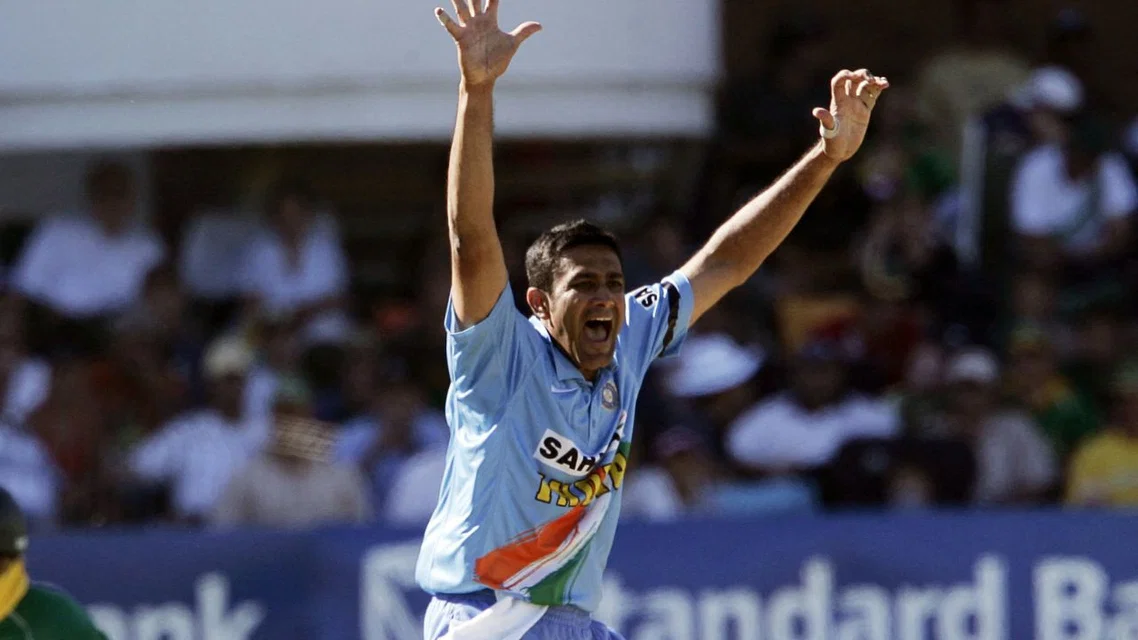
 Anil Kumble (Source: AFP)
A notion among cricket experts revolved around the former spin great, Anil Kumble, that ‘he is a Test specialist’, but India’s spin wizard defied and disproved all the notions with his bowling excellence in the ODIs as well. Alongside being the leading wicket-taker for India in Tests, Anil Kumble is still the leading wicket-taker in ODIs for India, even after almost two decades of his ODI retirement since 2007.
He scalped 337 wickets in 265 innings of the 271 ODIs he played, with an economy rate of just 4.29. His ODI career also included some of his iconic and memorable performances across various multi-team tournaments, alongside the World Cup. Kumble ended up as the biggest match-winner for India, and is still leading the list of the ‘bowlers with most wickets for India in the winning cause’.
In the winning cause, Kumble scalped 198 wickets in 127 innings, with a fantastic economy rate of just 3.96, including six four-wicket hauls and two five-wicket hauls. That said, here, we’ll have a look at the top five game-changing spells bowled by Anil Kumble in his 17-year-long ODI career.
Anil Kumble’s five best spells in ODIs
6/12 vs West Indies - Kolkata ODI, Hero Cup Final, 1993
The Richie Richardson-led West Indies faced the hosts, India, in the final of the Coca-Cola Cup in November 1993. The visiting skipper Richardson won the toss and asked the Men in Blue to bat first. On the back of Vinod Kambli’s 68 runs, followed by skipper Mohammad Azharuddin’s 38 runs, helped India post a total of 225 runs for the loss of seven wickets in the allotted 50 overs.
While chasing the target, the Caribbean batters failed to crack the ‘Anil Kumble’ mystery and fell like a pack of cards, scoring just 123 runs in 40.1 overs. Kumble registered his career-best figures in ODIs, picking six wickets for just 12 runs in 6.1 overs, with an outstanding economy rate of just 1.94. Eventually, India won the game by 102 runs to clinch the title, with Kumble getting named ‘Player of the Match’ award for his game-changing bowling performance.
5/33 vs New Zealand - Wellington ODI, 1994
After levelling the series with a seven-wicket win in the second ODI, India took on New Zealand in the third ODI of the four-match series. The hosts’ skipper, Ken Rutherford, won the toss and asked the Men in Blue to bat first. Mohammad Azharuddin’s men posted 255 runs for the loss of five wickets in the allotted 50 overs, courtesy of three half-centuries scored by Ajay Jadeja (56), Sachin Tendulkar (63), and Navjot Sidhu (71).
While chasing the target, the Kiwis were comfortably cruising towards the victory, but Anil Kumble hit them with a big blow in the end, dismissing Dion Nash and Adam Parore as the eighth and ninth wickets. Eventually, the Blackcaps were restricted to the score of 243 runs for the loss of nine wickets in the entire 50 overs owing to Kumble’s sensational five-wicket haul.
India won the game by 12 runs, and Anil Kumble was adjudged ‘Player of the Match’ for his match-winning and decisive five-wicket haul. The visitors also took a 2-1 lead in the four-match series against New Zealand.
4/12 vs Pakistan - Toronto ODI, 1996
The arch-rivals, India and Pakistan, locked horns in the third ODI of the five-match series in 1996. The game was played at the Toronto Cricket, Skating and Curling Club. The then-India skipper Sachin Tendulkar won the toss and asked his batters to take over the front. Rahul Dravid’s 46-run knock, followed by Mohammad Azharuddin’s 38 runs, helped India reach the total of 191 runs before getting bowled out in 50 overs.
Furthermore, the Pakistan batters didn’t find rhythm against India’s brilliant spin-pace duo of Anil Kumble and Venkatesh Prasad (3/22). Kumble finished as the leading wicket-taker for India in this game, picking four wickets for just 12 runs in his seven overs, with an astonishing economy rate of just 1.71, including two maiden overs. Eventually, India won this game by 55 runs, bundling out Pakistan at just 136 runs and took a 2-1 lead in the five-match series.
4/25 vs South Africa - Mumbai ODI, Titan Cup Final, 1996
In October 1996, India, South Africa, and Australia played in the Titan Cup in India. The hosts, India, and the Proteas reached the Tri-Nation tournament final. The Men in Blue took on South Africa in the summit clash on November 6, 1996, at the Wankhede Stadium in Mumbai. The hosts’ skipper, Sachin Tendulkar, won the toss and decided to bat first.
Sachin played a brilliant captaincy knock of 67 runs off 88 balls, followed by Ajay Jadeja’s unbeaten 43 runs off 42 balls and Rahul Dravid’s 41-ball 31. These contributions took India’s score to 220 runs for the loss of seven wickets in the allotted 50 overs.
While chasing the target, South Africa seemed to have a strong batting lineup, but it still went clueless against Anil Kumble’s spin brilliance. Eventually, Hansie Cronje and Co were bundled out at the score of just 185 runs, with India winning the Titan Cup final by 35 runs.
Anil Kumble won the ‘Player of the Match’ for his tournament-winning bowling performance in the final. He picked four wickets for just 25 runs in 8.2 overs, with an outstanding economy rate of 3.00.
2/29 vs South Africa - Kolkata ODI, Hero Cup Semi-Final, 1993
Although it was not a big four-wicket haul or a five-wicket haul, the economical spell bowled by Anil Kumble played a vital role in changing the fate of the game in the Hero Cup semi-final between India and South Africa in 1993. Speaking of the game, the hosts’ skipper Mohammad Azharuddin won the toss and decided to bat first. Most of the Indian batters failed except for Azharuddin’s 90 runs and Pravin Amre’s 48 runs to help India score 195 runs.
While chasing the target, South Africa had almost reached the target, but it still ended up being far away from them, as they could score 193 runs for the loss of nine wickets in the entire 50 overs. The two run-outs in the end, following Anil Kumble’s match-winning spell of ‘two wickets for just 29 runs in 10-over quota’, pushed the Proteas away from the win, as the Men in Blue clinched the thrilling win by a narrow margin of two runs to reach the tournament’s final.