![Alyssa Healy [Source: X/@cricketcomau]](https://onecricketnews.akamaized.net/parth-editor/oc-dashboard/news-images-prod/1768384120958_Healy.jpg?type=hq) Alyssa Healy [Source: X/@cricketcomau]
Alyssa Healy [Source: X/@cricketcomau]
Alyssa Healy’s retirement from international cricket created a storm. One of the most decorated players in women’s cricket decided to announce her retirement news during a podcast. No drama, no hype- it was a plain and simple announcement.
Healy identified the upcoming multi-format series against India to be her last international assignment. This announcement came as a shock to the entire cricket world. For Healy, an eight-time World Cup winner, there was every reason to stay and chase one last trophy.
The Healy bluprint: The selfless shift
But Healy didn’t. Healy decided to leave. She recognized that the greatest gift she could give her successor was time. By stepping away now, she ensured the team wouldn't just be entering a new era at the 2026 T20 World Cup—they would already be settled in it. The beauty of her exit was not in the timing, but in the honesty. It provides a blueprint for stars on when to leave at the peak with grace.
Healy was not picked in the Women's Premier League (WPL). She even had a poor Women’s Big Bash League (WBBL), with just 119 runs in 9 games for Sydney Sixers, including only 1 run in her last 3 matches. However, she was in great form during the Women’s 50-over World Cup just before the WBBL and scored back-to-back hundreds against the hosts India and Bangladesh.
With more than 8000 international runs to her name, Alyssa Healy could have waited for the T20 World Cup. But she trusted her own assessment. She did not want the world to see her struggle and her team suffer.
For most, it becomes difficult to take the call, especially when they become stars. Fans do not accept easily, and the media creates a buzz every time there is a sign. We live in an era where public figures are often encouraged to cling to the spotlight until it burns out. The fans worship their favourite players. In an era like this, it becomes nearly impossible to know the correct time. Healy’s retirement, therefore, is a wake-up call for stars to trust their internal shift more than trusting the trends.
"Retire when people ask 'why' and not 'why not’"
Similar to Healy, Australia’s former captain Meg Lanning announced her retirement from international cricket at the age of 31. For a generational captain like Lanning, it came as a surprise as she led Australia to another T20 Triumph earlier that year. After missing a few series post the tournament due to health issues, Lanning announced her retirement after a 13-year career with the national team.
There were players like Glenn McGrath who retired after a 5-0 Ashes win and a ‘Player-of-the-Tournament’ award in the 2007 Cricket World Cup, where he picked up 26 wickets at an average of 13.73. The following year, his long-time teammate Adam Gilchrist surprised the cricketing fraternity by retiring after a Test series against India.
According to Gilchrist, the decision was triggered by a dropped catch! Gilchrist dropped a crucial catch of VVS Laxman, which he considered an indication of his falling reflex, and decided to quit.
Sunil Gavaskar retired after scoring a century in the Lord’s bicentenary match in 1987 and famously quoted Vijay Merchant,
“Retire when people ask 'why' and not 'why not’”.
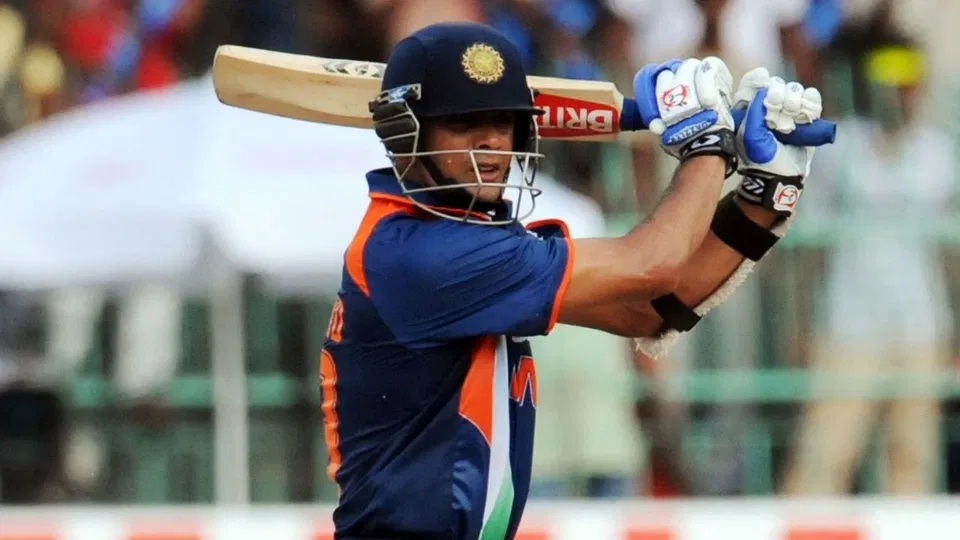
Similar instances could be seen from the actions taken by Graeme Smith, Sachin Tendulkar, AB de Villiers. Tendulkar did not just stay during the 2011 World Cup, he delivered in the historic campaign for India. Tendulkar earned his stay, unlike many Indian cricketers who chose to chase without adding much.
Importance of handover: Beyond the last dance
During the 2007 T20 World Cup, Rahul Dravid convinced the senior Indian players to skip the tournament. This proved to be a masterstroke as MS Dhoni led a young Indian team to the trophy and started his legacy as one of the greatest Indian captains ever.
However, MS Dhoni himself could not show the same restraint while deciding his career path. Many people questioned his decision to play the 2019 World Cup. From the team selection to showing the ‘intent’ on the field, the Indian team looked doomed at every step. Nowadays, Dhoni's IPL retirement remains a trending topic . Questions were raised about Ian Botham’s participation in the World Cup 1992. Botham, who decided to stay on and play the World Cup in 1992, looked like his shadow compared to his former self.
Indian greats like Kapil Dev and Mithali Raj had similar career trajectories, as the last few years of their careers were marked with controversies. Their intentions and motivations were questioned.
Players who invest countless years, go through extensive grinding, and make significant sacrifices for the greater good of the team do not deserve this. It is never pleasant to see such questions overshadow the legacy of legends.
Healy reminded the same. Healy identified the lack, the mental draining over the last few years, which often reflected in her performances. She did not choose to highlight the centuries made in the last World Cup, but she followed the instinct and signs.
For the geniuses, the wisdom lies in knowing when to stop. Geniuses understand that staying too long does not add to the legacy. Leaving at the right time does. They don't want to be worshipped; they want the game to be continued at a higher standard.
.jpg?type=mq "Highest successful run-chases in SA20")